A screen protector is important for protecting your device. It helps keep your phone’s display safe from scratches, cracks and everyday damage. However, choosing between tempered glass, film and hydrogel can be confusing. Each screen protector offers different levels of protection. So, which screen protector is best? Well, the right choice depends on your phone, usage and personal preferences. In this post, we will discuss the differences between these three screen protectors to help you make the best choice. Let’s dive in…
Tempered Glass vs Film vs Hydrogel: Key Differences at a Glance
Here is a quick comparison of their main features. Take a look…
| Features | Tempered Glass | Film Protector | Hydrogel Protector |
| Scratch Protection | Good to very good | Basic to moderate | Good |
| Drop Protection | Best | Very limited | Limited |
| Display Clarity | Excellent | Good to excellent | Very good |
| Touch Sensitivity | Excellent | Good | Excellent |
| Thickness | Thickest | Thinnest | Thin and flexible |
| Flexibility | Rigid | Flexible | Highly flexible |
| Edge Coverage | Depends on design | Good | Very good |
| Fingerprint Sensor Support | Varies by model | Good | Good |
| Installation | Moderate | Can be tricky | Requires careful fitting |
| Durability | Good, but can crack | May scratch or peel | Can wear or peel with usage |
| Price | Low to high | Generally affordable | Moderate to high |
Tempered Glass vs Film vs Hydrogel: Which Screen Protector Is Best?
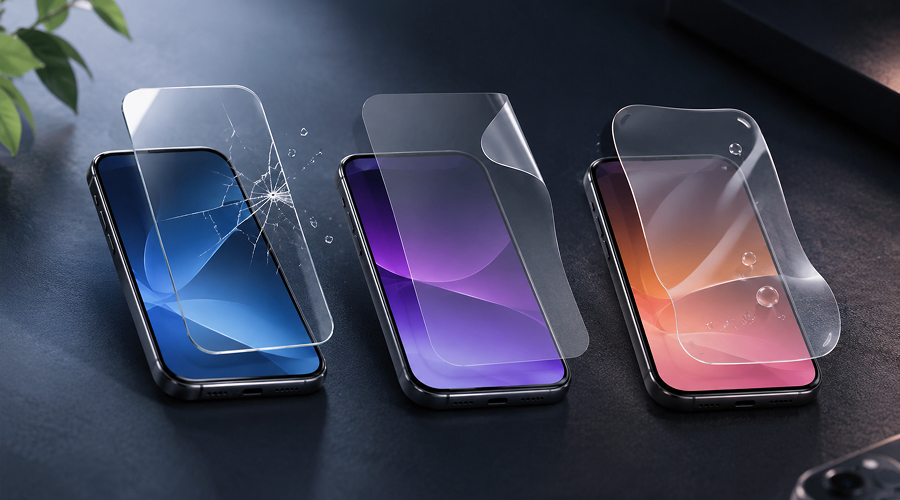
All three protect your phone’s screen but in different ways. Tempered glass protects against impacts, film guards against scratches, and hydrogel offers a thin, flexible design. Let’s compare their key features to help you choose the best option. Here we go…
1. Scratch and Drop Protection
Protection is one of the main features that all three screen protections offer. However, tempered glass, film and hydrogel offer different levels of safety against scratches and accidental drops.
- Tempered Glass Protectors: Tempered glass offers the best impact protection among all three options. It is made stronger to absorb impacts and may crack instead of your phone’s screen. Also, it provides protection against everyday scratches, but cannot prevent screen damage from every drop.
- Film Protectors: These protectors are mainly designed to provide protection against everyday scratches, dust and minor marks. Made from thin PET or TPU plastic, they offer little protection against hard drops.
- Hydrogel Protectors: Hydrogel protectors are made from flexible materials that can absorb minor impacts and resist everyday scratches. Hydrogel can reduce small surface marks but offers less impact protection than tempered glass.
What We Think: Tempered glass protector is an excellent choice for people who frequently drop their phone.
2. Display Clarity and Touch Sensitivity
A good screen protector should maintain clear visuals and allow you to use the touchscreen smoothly.
- Tempered Glass Protectors: Tempered glass offers clear display quality without affecting colours or brightness. Its smooth surface also makes scrolling, typing and gaming easy.
- Film Protectors: Film protectors offer good clarity, but cheaper ones may look dull or feel plastic-like. Matte films reduce glare but can make the screen look less sharp.
- Hydrogel Protectors: Hydrogel protectors offer good clarity and touch response, though their soft surface feels different from glass. Low-quality options may also look slightly hazy.
What We Think: Tempered glass is a great choice for people who want to have clear visuals and a natural touch experience while protecting their displays.
3. Thickness, Flexibility, and Edge Coverage
These three protectors differ on thickness, flexibility and edge coverage as well.
- Tempered Glass Protectors: Tempered glass is thicker and offers better impact protection but may not be ideal for phones with curved edges. They can cause edges to lift.
- Film Protectors: Film protectors are thin, flexible and case-friendly but can be difficult to install without bubbles or dust.
- Hydrogel Protectors: Hydrogel protectors are thin and flexible. This makes them ideal for phones with curved screens and edges.
What We Think: If your phone has a curved display and you want better edge coverage for it, then hydrogel is the best option.
4. Fingerprint Sensor Compatibility
Fingerprint sensor compatibility is another important factor to consider when selecting a screen protector.
- Tempered Glass Protectors: Thick or low-quality tempered glass may affect fingerprint recognition, but many modern options support in-display fingerprint sensors.
- Film Protectors: Film protectors are thin and usually work well with fingerprint sensors, depending on their quality.
- Hydrogel Protectors: Hydrogel protectors often work with under-display fingerprint sensors, but compatibility varies by phone.
What We Think: Make sure to check whether the screen protector supports your phone’s fingerprint sensor before buying one.
5. Installation, Durability, and Replacement Cost
The installation process and long-term durability also matter when choosing a screen protector.
- Tempered Glass Protectors: Tempered glass is easy to install with the included tools; however, dust or poor alignment can lead to bubbles or an uneven finish. Tempered glass resists scratches but may crack on impact.
- Film Protectors: Film protectors are affordable and easy to replace but can be tricky to install without bubbles. They may also scratch, peel or develop marks over time.
- Hydrogel Protectors: Hydrogel protectors may need careful or wet installation. Small bubbles can appear initially but may disappear as the protector settles.
What We Think: Choose the one that fits your budget and preferences as screen protectors come in various price ranges. Film is the cheapest option, while tempered glass and hydrogel vary in price.
6. Compatibility With Curved and Foldable Displays
Not all screen protectors suit every phone, especially those with curved or foldable displays. If you use an android phone, make sure to choose a screen protector that matches your device’s display design and supports its features.
- Tempered Glass Protectors: Tempered glass suits flat screens but may not fit curved edges properly or can lift over time.
- Film Protectors: Film protectors are flexible and fit curved screens more easily, but options are available for specific phone models only.
- Hydrogel Protectors: Hydrogel protectors fit curved screens the best because their flexible material covers the edges better.
What We Think: Choose the protector based on your phone’s design. Also, do follow the manufacturer’s recommendations if you have foldable phone.
Tempered Glass vs Film vs Hydrogel: Pros and Cons
Each screen protector has its own strengths and weaknesses; knowing them can help make the best choice. Here are the pros and cons of each protector:
Tempered Glass
Pros:
- Offers the best impact protection.
- Provides excellent display clarity.
- Smooth surface for comfortable scrolling and typing.
- Provide protection from everyday scratches.
- Available in different price ranges.
Cons:
- Can crack after accidental drops.
- Do not fit curved screens properly.
- Can affect fingerprint recognition if poorly designed.
- Adds more thickness than film or hydrogel.
Film Protector
Pros:
- Thin and lightweight.
- Affordable option.
- Offers basic protection against scratches.
- Offer flexibility to fit curved displays.
- Usually works well with phone cases.
Cons:
- Offers very little protection against drops.
- Can develop scratches and marks.
- May be difficult to install without bubbles.
- Can peel around the edges over time.
Hydrogel Protector
Pros:
- Thin and flexible.
- Fits curved displays more easily.
- Offers good everyday scratch protection.
- Maintains good touch sensitivity.
- Some can hide minor surface marks.
Cons:
- Offers less impact protection than other protectors.
- May feel softer than a glass protector.
- Installation can be tricky sometimes.
- Can peel or wear out with regular use.
- May cost more than basic film protectors.
Which Screen Protector Is Best for Your Phone?
The choice mainly depends on your phone’s display and how you use your device. Before making a decision, it’s important to check your phone’s specs, such as display type, screen size, curved edges and fingerprint sensor support. Here are some recommendations based on different needs. Take a look…
Choose Tempered Glass Protectors if:
- You tend to drop your phone pretty frequently.
- You want maximum impact protection.
- You desire better protection and clear display quality.
- You want better fingerprint sensor compatibility.
Pro Tip: Choose one made for your phone model and check fingerprint sensor compatibility before buying.
Choose Film Protectors if:
- You prefer a thin screen protector.
- You want to protect your phone without adding thickness to it.
- You want basic scratch protection without changing the screen’s feel.
- You want an affordable and easy to replace option.
Choose Hydrogel Protectors if:
- You have a phone with curved displays.
- You want good edge coverage.
- You prefer a thin and flexible screen protector.
- You want protection against minor scratches and surface marks.
IMPORTANT NOTE: These protectors are designed for regular phones. If you have a foldable phone, use a screen protector approved for your device. Avoid using ordinary tempered glass or unapproved protectors on the inner folding screen.
The Bottom Line
So, there you have it: the differences between tempered glass, film and hydrogel protectors. All of these screen protectors are designed to protect your phones; however, they serve different purposes. Tempered glass offers better protection against drops, while film protects against everyday scratches.
Hydrogel is a good choice for curved screens. Choose wisely based on these differences. You are advised to consider your phone’s display, fingerprint sensor and protection needs before you buy a protector. Always choose a screen protector made for your phone model to ensure a proper fit.