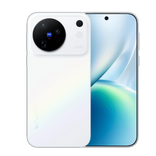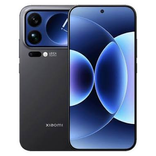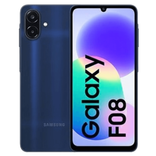
With so many smartphone brands available on the market, making the right choice may seem like challenging. Among several important aspects, such as camera setup, processor and display, phones with higher battery life are more in demand in this age. This is because improved battery performance keeps users connected at all times. Seeing this, many smartphone brands have already started using silicon-carbon batteries as a major upgrade over traditional lithium-ion (Li-ion) batteries. But surely most people may find it difficult to make the right choice of battery. If you are also one of them, then this post is for you.
In this post, we will talk about the differences between Silicon-Carbon Battery vs Li-Ion to help you make a better choice. So, let’s get started…
Understanding Lithium-Ion Battery – What Is It?
Lithium-ion batteries are the most commonly used batteries. They have powered smartphones for more than two decades. They are designed to store a large amount of energy, recharge quickly and provide reliable performance for everyday use. All in all, Li-ion batteries offer a good balance of battery life, charging speed, safety and durability, which makes them a popular choice for smartphones. Over the years, phone manufacturers have improved charging speeds, battery management systems and durability, and that’s the reason these batteries are also found in many flagship devices. These batteries provide everything, from performance and safety to affordability.
Pros
- Reliable technology
- Available widely across devices
- Lower production cost
- Excellent compatibility with modern fast charging
Cons
- Lower energy density
- Larger batteries require more internal space
- Lack cold weather performance
Understanding Silicon-Carbon Battery – What Is It?
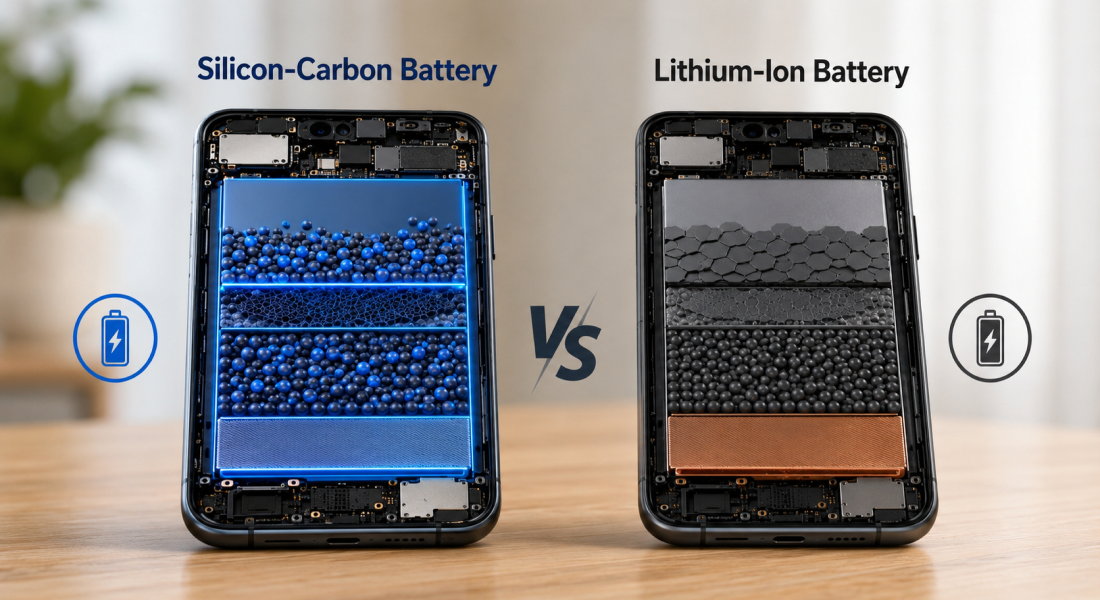
A silicon-carbon battery is actually an improved version of the traditional lithium-ion battery. These batteries use silicon along with carbon to store more energy in the same amount of space. This gives smartphone manufacturers the freedom to include larger batteries on phones without making them feel heavier or bulkier. Larger batteries lead to longer hours of usages and at the same the lightweight makes it easier for users to hold their phone for long. And that’s the main advantage Silicon-Carbon battery offers and are already making waves for.
Pros
- Higher energy density
- Longer battery life
- Provides freedom to accommodate larger batteries in slimmer phones
- Better performance in cold weather
- More efficient use of internal space
Cons
- Still relatively new
- Currently available in fewer smartphones
- Slightly increases manufacturing costs
Silicon-Carbon Battery vs Li-Ion: How Do These Two Batteries Differ?
These two batteries differ mainly on size. Larger Silicon-Carbon battery can be accommodated in the same space, where a small Li-Ion battery fits. So, the main advantage of silicon-carbon batteries is their higher energy density. Since they can store more energy, manufacturers have flexibility to fit a larger battery inside the same-sized phone and promote it as a major upgrade.
Besides that, with a Silicon-Carbon batteries, manufacturers can even keep the battery capacity the same and make the phone thinner and lighter. That’s the reason most recent mobile phones come with larger battery capacities. A detailed smartphone comparison can help users understand how these battery improvements translate into real-world benefits when comparing different devices. Some phones are promoted with massive 7000mAH and even more such as OnePlus Nord 6 comes with 9000mAh battery. All of these phones come with larger batteries without becoming noticeably thicker.
Besides that,
It helps users to enjoy longer usages and everyday battery life without sacrificing on design elements.
Phones That Include Silicon-Carbon Batteries
There are many smartphones that include Silicon-Carbon batteries, some of which are as follows. Take a look…
- Honor Magic7 Pro
- Honor Magic V5
- iQOO 13
- OnePlus 13
- OnePlus 13R
- Oppo Find X8 Pro
- Realme GT 7 Pro
- Vivo X200 Pro
- Vivo X200 Ultra
- Xiaomi 15
- Xiaomi 15 Ultra
Silicon-Carbon vs. Li-Ion Batteries: A Comparison Across Every Important Aspect
Here is a detailed comparison between Silicon-Carbon and Li-Ion batteries across some of the most important aspects. Take a look…
1. Everyday Battery Performance
Most users today look for longer battery lives as they use their phone for most of their tasks, such as browsing social media, watch videos, chatting, photography and even gaming. Definitely, both battery types provide good battery performance; however, silicon-carbon batteries provide extra endurance as they can store more power. So, for heavy users, a mobile phone with silicon-carbon battery can offer
several additional hours of screen time or even another half-day of add performance. Even heavy gamers and frequent travellers notice this improvement the most.
2. Faster Charging Speed
Of course, both batteries offer fast charging benefits. However, silicon-carbon batteries support ultra-fast charging that even a phone with a traditional Li-ion battery can also support. Here the main role is of technology used. Yes, it’s the technology that mainly affects how much energy the battery can hold rather than how quickly it charges.
3. Size and Design of Phone
Another most talked about advantage of silicon-carbon battery is the design flexibility. As you know these batteries are able to store more energy in less space. This gives manufacturers the freedom to house better camera hardware, improved cooling systems, larger speakers, slimmer designs and bigger batteries without increasing thickness. This makes the whole smartphone feel lighter and easy to hold even during longer usages.
4. Cold Weather Performance
Silicon-carbon batteries comparatively perform better in cold temperatures. This is because traditional Li-ion batteries often lose efficiency in freezing conditions. This ultimately leads to faster battery drain. But that’s not the case with silicon-carbon batteries because they are designed to maintain their performance even in cold temperatures.
5. Battery Lifespan
When it comes to battery lifespan, both battery types naturally lose some capacity after hundreds of charging cycles. Thankfully, modern smartphones come with advanced battery management systems. These systems help reduce long-term wear. So, it may be tough to notice the difference in lifespan between the two technologies, especially when the phone is very new.
However, with good charging habits you can you can improve battery health, irrespective of the type of battery your smartphone comes with.
6. Safety
Safety is naturally an important aspect. When it comes to safety, silicon-carbon batteries stand out. Silicon-carbon batteries definitely belong to the lithium battery family; however, they include multiple safety features such as temperature monitoring, charging protection and voltage control. This makes them a safer option compared to Li-Ion batteries.
Silicon-Carbon Battery Vs. Li-Ion Battery: Which Battery Is Better?
Definitely, silicon-carbon batteries are better as they offer higher battery capacity without making phones bulkier. This allows users to enjoy longer battery life while having lightweight, sleek and stylish phones. But that does not make lithium-ion batteries less useful. Li-Ion batteries are also highly reliable, safe and capable of delivering excellent battery life in well-designed smartphones.
Understand that battery is just a part of your overall smartphone experience. So, instead of just looking at the battery type, you are advised to look for a well-optimized device with excellent processor, optimized software and reliable cameras for an unforgettable user experience.
The Bottom Line…
So, that’s how the silicon-carbon batteries and Li-Ion batteries differ. Undoubtedly, Silicon-Carbon batteries are new and more impactful, designed to fit into compact devices, without making them look bulkier. They stand out for longer battery life, thinner phones and better efficiency. If you have to choose between two similar smartphones, then the one with a silicon-carbon battery makes a battery choice for long-term usages.
However, if a phone with a traditional Li-ion battery offers better features overall, then pick the one that’s well optimized. This is because a well-optimized Li-ion phone is sure to deliver outstanding performance and all-day battery life for years to come.