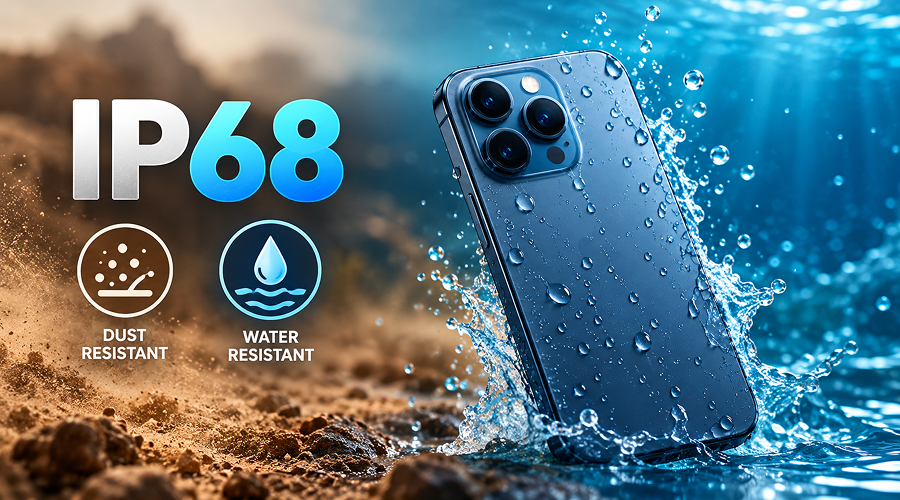
IP68 rating is one of the most popularly used terms that users come across when buying smartphones, smartwatches, earbuds or other electronic devices. It usually shows that a device can handle dust and water. But is that all about IP68?
Now exactly! There is more to dust and water resistance rating.
An IP68 rating means that the device can resist dust and water under specific test conditions but it does not make it completely waterproof. Understanding IP68 helps you know its limits and avoid mistakes, such as using it in seawater or assuming water damage is covered by warranty. Read this post to learn more about IP68 rating. Let’s dive in…
What Does “IP” Stand For?
IP stands for Ingress Protection. An IP rating shows how well an electronic device is protected from dust, dirt, and water. It is usually written as “IP” followed by two numbers. For example: IP68
The system is based on standards developed by the International Electrotechnical Commission (IEC). It is worth noting that IP ratings are based on specific tests. Hence, all IP68 devices do not offer the same protection in every situation. Therefore, you it is crucial to check the manufacturer’s guidelines when you buy a device.
How to Read an IP Rating
As said earlier, an IP rating includes two digits. Each digit signifying different things. The first digit usually relates to protection against solid objects and dust. Whereas, the second one stands for protection against water.
For example,
- The first digit in IP68 i.e., “6” stands for protection against solid particles and dust.
- While 8 shows protection against water.
First Digit: Dust Resistance Scale
The first digit ranges from 0 to 6. A higher number generally means better protection against solid particles. Here is what it means from 0 to 6:
| First Digit | Protection Level |
|---|---|
| 0 | No protection |
| 1 | Protection against large solid objects |
| 2 | Protection against fingers or similar objects |
| 3 | Protection against tools and objects larger than 2.5 mm |
| 4 | Protection against objects larger than 1 mm |
| 5 | Dust protected |
| 6 | Dust-tight |
An IP6X is considered the highest dust protection rating in the standard. “6” in an IP68 rating shows how well a device is protected from dust entering its enclosure. However, it is worth noting that dust can still collect on the outside; the rating only covers protection against dust getting inside under specific test conditions.
Second Digit: Water Resistance Scale
The second digit in an IP68 rating relates to protection against water. The scale runs from 0 to 9. However, each level represents the different type of water exposure. Such as:
| Second Digit | General Protection |
|---|---|
| 0 | No water protection |
| 1 | Protection against vertically falling water drops |
| 2 | Protection against vertically falling drops when tilted |
| 3 | Protection against spraying water |
| 4 | Protection against splashing water |
| 5 | Protection against water jets |
| 6 | Protection against powerful water jets |
| 7 | Protection against temporary immersion |
| 8 | Protection against continuous immersion under specified conditions |
| 9 | Protection against high-temperature, high-pressure water jets |
That’s when things get confusing. For instance, an IPX7 means a device has been tested for temporary water immersion, while IPX8 means it has been tested for deeper or longer immersion under specific conditions. Still, IP68 does not mean completely waterproof. Moreover, the exact water depth and time can vary. Therefore, you are advised to check the manufacturer’s specifications when buying a phone or any other device.
IP67 vs IP68 vs IP69K — Real Differences
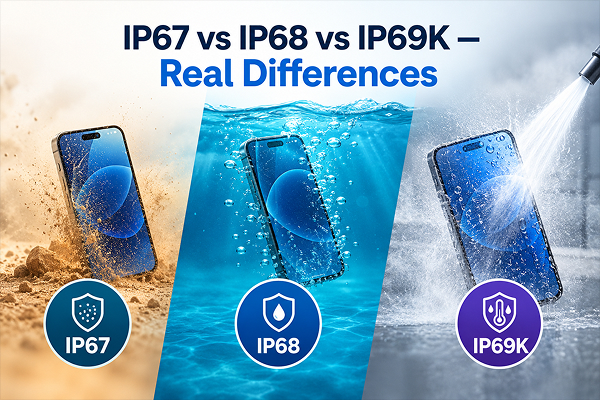
IP67, IP68, and IP69K are often mentioned together, but they differ a lot. If you are researching a new smartphone, a phone comparison site can help you evaluate these ratings alongside other specifications. Here are some significant differences; take a look….
IP67
An IP67 device is dust-tight. It relates to protection against temporary immersion in water under specified test conditions. For instance, if your phone accidentally falls into a sink or is briefly submerged, an IP67 rating can handle it. This is because it is meant to handle such water exposure. But it never claims to handle prolonged underwater exposure even under the same circumstances.
IP68
IP68 offers the same high level of dust protection as IP67. However, it ensures better protection against water immersion. The depth and time limit can vary between devices. You are advised to check the manufacturer’s specifications for the level of water protection it offers.
IP69K
IP69K is designed for a different kind of water exposure. It relates to protection against high-pressure, high-temperature water jets. This protection is useful for equipment that needs strong cleaning. For smartphones, IP69K is not just a better version of IP68. The two ratings test different types of water exposure, so a device may handle immersion but still have limits with powerful hot water jets.
Pro Tip: Make sure to check manufacturer’s specifications when buying a device instead of just assuming that the highest number always provide better protection.
What IP68 Does NOT Protect Against
An IP68 rating also has certain limits and knowing those limits is crucial to make a smart buying decision. IP68 does NOT protect against:
Saltwater and Pool Chemicals: Know that an IP68 rating does not automatically protects your device from seawater or swimming pools. Saltwater contains salt that can cause corrosion, while pool water contains chlorine and other chemicals that can affect your phone over time.
Dropping an IP68 phone in water, seawater, or a swimming pool may not cause immediate damage, but repeated exposure can still harm the device. If your phone accidentally gets wet, instantly follow the manufacturer’s cleaning instructions and completely avoid using it underwater. Understand that IP68 protects against accidental water exposure, not regular underwater use.
Pressure Beyond Lab Conditions: An IP68 does not at all mean a device can withstand water at any depth. Water pressure increases with depth, and the IP68 test is performed under specific controlled conditions. Real-world conditions can be different from lab tests. Carrying your phone while swimming underwater can put extra pressure on your device. This is because IP68 does not guarantee protection during diving, water sports or other high-pressure water activities.
Why Warranty Still Won’t Cover Water Damage
You might have seen that a phone has an IP68 rating and still have limited or no warranty coverage for water damage. This usually happens because water resistance can weaken over time due to normal wear, drops, cracks, repairs, age or exposure to certain liquids.
Moreover, manufacturers also exclude liquid damage from their standard warranty. This is because IP68 protection and warranty coverage are two different things. Even if a phone is IP68-rated, it does not at all signifies that it will repair or replace the phone if it suffers water damage. Hence, you are advised to check the warranty terms to understand whether or not the water damage will be covered.
Do You Actually Need IP68?
Many people see IP68 as a useful feature. This is because it ensures protection against everyday water accidents, such as rain, spills, sweat or accidental drops near a sink, pool or any other water body. An IP68 rating can be a top priority for people who travel a lot, spend time outdoors or exercise with their phone.
However, IP68 may not be a top priority for people who use their devices indoors most of the time. Instead, they may prefer features like battery life, display, performance, camera, software support, repairability and price when buying a new device. If you are planning to buy a cell phone device, consider IP68 as one of the useful features, but do not let it be the only factor influencing your decision. Definitely, you cannot solely rely on IP68 rating when making a purchase. It, of course, offers extra protection, but it does not automatically ensure a phone is waterproof.
The Bottom Line
So, this is all about IP68 rating. Hopefully, this article has been informative for you and helped you have in-depth understanding of IP68 rating. An IP68 rating signifies a device has a high level of protection against dust and water under specific test conditions. The “6” means strong protection against dust, while the “8” means the device can handle water immersion under specific conditions.
However, IP68 does not make a phone completely waterproof. It does not mean you can take it deep underwater, use it freely in seawater or expose it to strong water pressure. In addition, water damage may also not be covered by the warranty. So, in simple terms, an IP68 rating relates to protection against accidental dust and water exposure (with certain limits). Hence, you are advised to always check the manufacturer’s specifications and warranty before you buy a device.