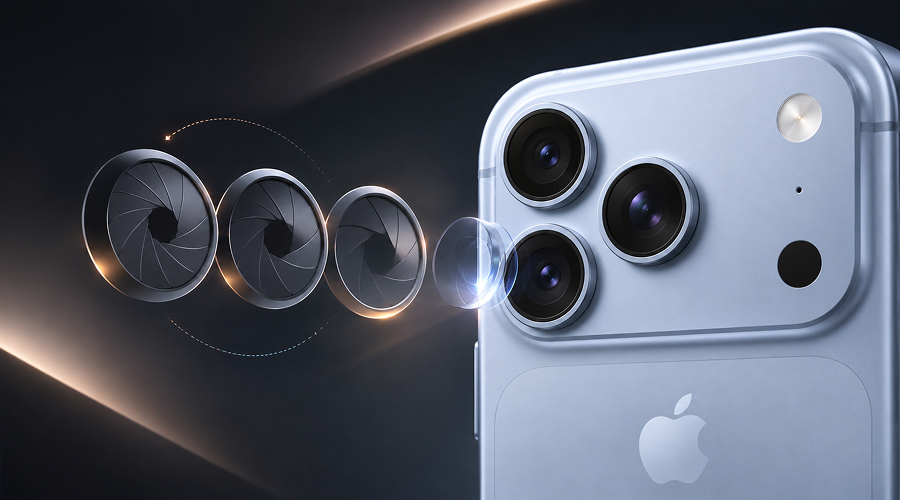
The Apple iPhone 18 Pro & Pro Max brought a major camera upgrade. They are the first iPhones to include variable aperture cameras. It allows the main camera to change the lens opening based on lighting and the type of photo. Unlike earlier iPhones, it can control how much light enters the camera and how much of the scene stays in focus.
This gives users more control when taking photos and videos. If you want to know more about the iPhone 18 Pro’s variable aperture camera, read this post. Here, we have covered everything you need to know about how it works and how it improves photography. Let’s dive in…
What Is Aperture on a Smartphone Camera?
Aperture is the opening in a camera lens through which light enters and reaches the image sensor. Aperture controls how much light enters the camera and affects how bright a photo looks. It is measured in f-numbers, such as f/1.8, f/2.4 and f/4.0. A smaller number means a wider opening. This means that it lets in more light.
For example, f/1.8 lets in more light than f/4.0. A wider opening makes it easier to take pictures at night or in dark rooms. Also, aperture affects how much of a photo stay in focus. A wider opening creates a blurred background, while a narrower opening keep more of the scene clear.
What Is Variable Aperture and How Does It Work Mechanically?
A variable aperture is an advanced camera feature. It allows the lens opening to change size. It uses small movable blades arranged inside the lens so as to control how much light reaches the sensor. Like our eyes, a variable aperture camera adjusts its opening based on light. It opens wider in dark places to let in more light and becomes smaller in bright conditions to reduce the light entering the camera.
In a smartphone with a fixed aperture, the lens opening remains the same. The camera relies on other settings and image processing to manage different lighting conditions.
However, with iPhone 18 Pro, users have the access to variable aperture camera. A variable aperture camera can physically widen or narrow the opening. This helps it adjust to different lighting conditions and gives users more control over how their photos look.
Fixed vs Variable Aperture — What Changes in Real Photos?
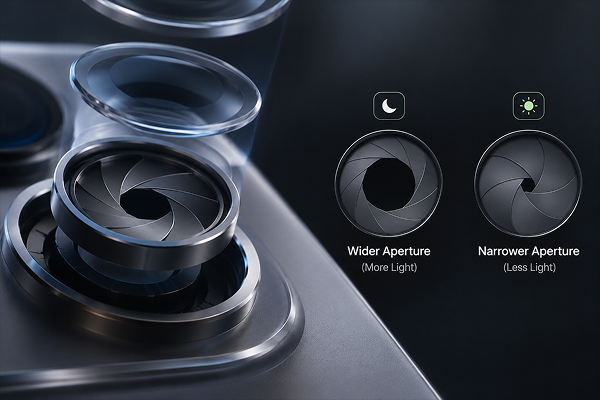
There are a lot of differences between a fixed and variable aperture cameras. However, the main difference between them is of their ability to control the amount of light entering the lens. A fixed aperture camera has one opening size, while a variable aperture camera can adjust it for different shots and lighting conditions. Here is how this difference affects everyday photography:
a. Low Light Performance
A wider aperture lets more light into the camera. This helps users to take brighter pictures in darker environments. It often comes in handy when someone has to take photos indoors, in restaurants or during evening events. A narrower aperture lets in less light. It works well in sunny conditions as it prevents pictures from looking too bright in such conditions.
b. Depth of Field and Bokeh Control
Depth of field refers to the area of a photograph that appears in focus. It plays an important role in portrait photography. A wider aperture keeps the subject sharp while blurring the background. This effect is called bokeh. A narrower aperture keeps more of the scene in focus, making it useful for landscape and group photos. Variable aperture gives photographers more flexibility to choose between these effects.
c. Video Recording
Aperture also affects video recording. Changing the lens opening can help manage incoming light and depth of field while recording. For instance, a wider aperture can help capture brighter footage in dim light. A narrower aperture, on the other hand, can help retain more detail across the scene.
However, it is worth noting that exposure also depends on shutter speed, ISO and other camera settings. Variable aperture works alongside these settings so that balanced videos can be produced.
How iPhone 18 Pro Implements It (f/1.48 to f/4.0)
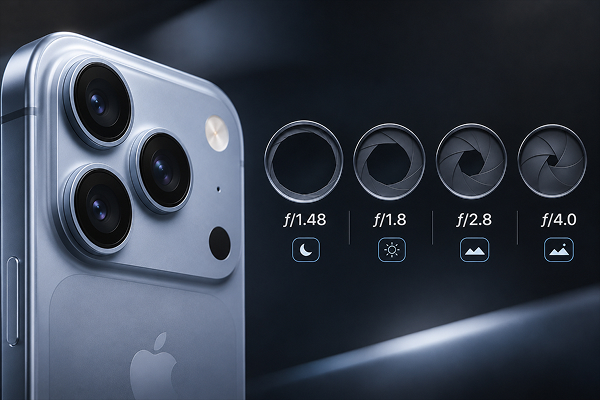
The iPhone 18 Pro features a 48MP Fusion Main camera with a variable aperture. It offers four aperture settings: f/1.48, f/1.8, f/2.8 and f/4.0. All of these settings serve different purposes, such as:
- f/1.48: It is the widest opening. It allows more light to enter the sensor, allowing users to take stunning low-light photos.
- f/1.8: This is the default setting. It helps maintain a balance between light intake and depth of field.
- f/2.8: It is a narrower opening, meant for keeping more details in focus.
- f/4.0: This setting provides greater depth of field. It helps the scene to appear sharper and cleaner.
The iPhone 18 Pro camera can automatically adjust the aperture according to the lighting and scene. However, users can also access aperture controls through the Camera app’s Pro controls. This allows users to have greater creative flexibility.
According to Apple, the wider f/1.48 setting offers around 50% better low-light performance compared with the f/1.8 setting. This makes iPhone 18 Pro a stunning choice for those who frequently take photos indoors or in darker environments.
IMPORTANT NOTE: It is important to note that variable aperture is available on the main rear camera. The Ultra-Wide and Telephoto cameras have fixed apertures.
Has Any Phone Done This Before? (Samsung Galaxy S9, 2018)
Well, Apple is not the first smartphone manufacturer to introduce variable aperture technology. Samsung has already introduced this feature to smartphones with the Galaxy S9 and Galaxy S9+ in 2018. Samsung called it Dual Aperture. The camera could switch between f/1.5 and f/2.4 settings depending on the lighting conditions.
In low light, the Galaxy S9 camera used f/1.5 to let in more light. In bright conditions, it switched to f/2.4 to control the light and improve image quality. Samsung also used this feature in the Galaxy S10 series but later brand stopped including it in its newer flagship phones.
The iPhone 18 Pro includes this feature with four aperture settings, unlike Samsung’s Galaxy S9 that includes the two aperture options. Also, it combines the technology with Apple’s image processing and camera controls. This gives iPhone 18 Pro users much control over lighting, focus and the overall look of their photos.
Does Variable Aperture Make a Real Difference for Everyday Shooters?
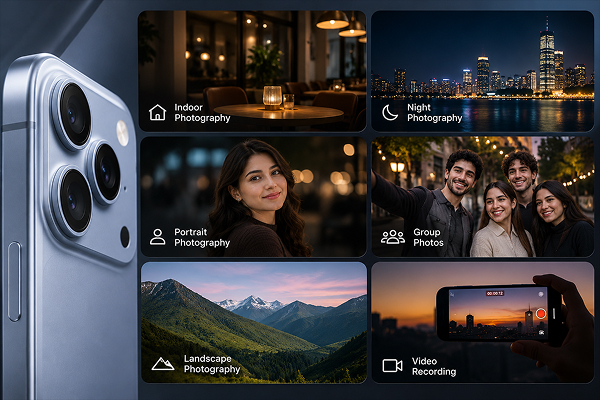
Yes, it does! A variable aperture camera can help take incredible photos in different lighting conditions. Here are some ways it helps improve everyday photography:
- Indoor Photography: Taking clear night photos can be difficult without a wider aperture. The wider aperture helps capture brighter night shots, whether you capture photos inside your home, a restaurant and other indoor spaces.
- Night Photography: More light entering the sensor automatically improves image quality. A variable aperture camera helps take stunning photos in dim surroundings or darker environments.
Portrait Photography: Variable aperture turns out to be useful when it comes to taking portraits, group photos and other pictures where focus matters. A wider aperture can blur the background and make the subject stand out, while a narrower aperture keeps more of the scene in focus.
Group Photos: Aperture adjustments give users more control over how their photos look. A narrower aperture can help keep more people in focus, particularly when they are standing at different distances.
- Landscape Photography: Greater depth of field can help retain details across the scene and that’s when a variable aperture camera come in handy.
- Video Recording: Variable aperture helps control the light entering the camera and how much of the video stays in focus. It helps capture brighter videos in low light and keeps more details clear. Also, it gives users more control over background blur.
However, variable aperture alone cannot make everyday photography better. Image quality also depends on the camera sensor, lens quality, image processing, lighting and shooting conditions.
People who take pictures in good daylight may not be able to notice any difference. The difference becomes noticeable for people who frequently take photos in low-light conditions or someone who wants greater control over their shots may find this feature more useful.
Putting it all together…
So, this is all about iPhone 18 Pro’s variable aperture camera. Variable aperture is a useful camera feature for many people, especially the ones who take night shots more often. It helps users have more control over light and depth of field. The iPhone 18 Pro and iPhone 18 Pro Max are the first-ever Apple devices to have variable aperture.
Variable aperture in iPhone 18’s models come with four aperture settings. It allows the main camera to adjust to different lighting conditions and shooting needs. Samsung introduced this feature in 2018, but Apple offers more aperture options. It gives users greater control over their photos, making smartphone photography more flexible and creative.