RAM, or Random Access Memory, is one of the most important parts of your device. It impacts the overall functioning of your smartphone. Now, when people rely most on applications, having an AI-capable phone with a good RAM can be a wise decision.
But the question here is how much RAM is good for the fast and smooth functioning of your device. If you also have this question in mind, then go through this post until the end. Here, we have discussed why having a smartphone with good RAM crucial. So, without any further ado, let’s get started…
Before we understand how much RAM is required for your phone to run quickly and efficiently, let’s first know what RAM is and why it is vital. Here we go…
Table of Content
- What Is RAM?
- Why RAM Still Matters in 2025?
- Types of RAM
- Which is better?
- How Much RAM Do You Need?
- How Much Do You Actually Need?
- What Happens When There Is Not Enough RAM?
- What to Do in Case of Insufficient RAM?
- Smartphone Market Trends in 2025
- Future Smartphone Trends to Watch
- Buying Checklist
- FAQs
- Bottom Lines
What Is RAM?
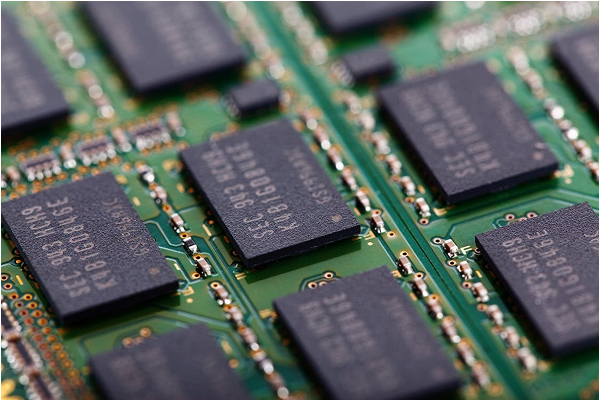
RAM is a chip comes included in your smartphone. It temporarily stores data used by the OS (operating system), apps and drivers. It impacts the overall performance of your device. A good RAM is essential to have lightning-fast access to information, a smooth interface and quick app launches.
The more RAM, the better the performance of your device. You can have multiple applications running without any glitches with the help of the RAM. Even more demanding tasks, such as gaming, video editing and so on becomes a breeze with more RAM. The right RAM makes multitasking a cakewalk for users. With smartphones integrating AI capabilities, choosing the right amount of RAM has become more important than ever.
Why RAM Still Matters in 2025?
RAM is the workspace where your phone stores active app code and data. It basically provides space to hold multiple applications and processes simultaneously. In case your device lacks enough RAM, running application will become a task. The OS will close background apps or compress them.
This will significantly delay the reloading of those apps. Even with faster SoCs and sophisticated software, physical RAM remains the fastest spot for rapid access. Hence, having more RAM is crucial. It instantly enhances the functioning of your device even when you are multitasking or moving between heavy apps.
Types of RAM
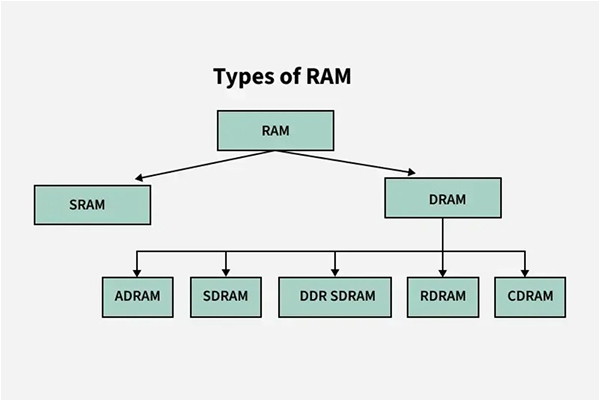
There are mainly two types of RAMs used in smartphones, which include LPDDR5x and LPDDR4x. LPDDR5x is the more advanced and faster version of LPDDR5. LPDDR5x RAMs are mostly integrated in flagship or premium devices, including the iPhone 16 and subsequent variants, Xiaomi 14 Ultra and subsequent variants, the Samsung Galaxy S23 Ultra and subsequent models, OnePlus 12, Realme GT 6 and so on. LPDDR5x is known to offer speeds up to 8000 Mbps.
LPDDR4x RAMs are used in budget and mid-range devices, including Samsung Galaxy A05, Samsung Galaxy S10, Xiaomi Redmi Note 14, Realme C67 and others. It offers speeds up to 4266 Mbps and is ideal for basic gaming, integrated graphics and so on. These RAM types are available across all types of models, making it easier for users to choose according to their needs and budget.
Which is better?
Definitely, LPDDR5x. LPDDR5x typically increases peak bandwidth and improves efficiency. This makes a phone with even 12 GB of LPDDR5X feel snappier than a phone with the same capacity using older memory. In 2025, major mobile phone companies are using LPDDR5x RAM as it supports AI features and high bandwidth that are required for the seamless functioning of the device with premium features.
Hence, when you evaluate RAM, do check the capacity (GB) and type of RAM used in it.
It is worth noting that having a good RAM capacity is crucial to have your phone working smoothly, especially when you indulge in heavy tasks, such as gaming. Without the right amount of RAM, even the fastest LPDDR5x won’t help much.
So, how much more RAM is good for you?
Read ahead to know….
How Much RAM Do You Need?
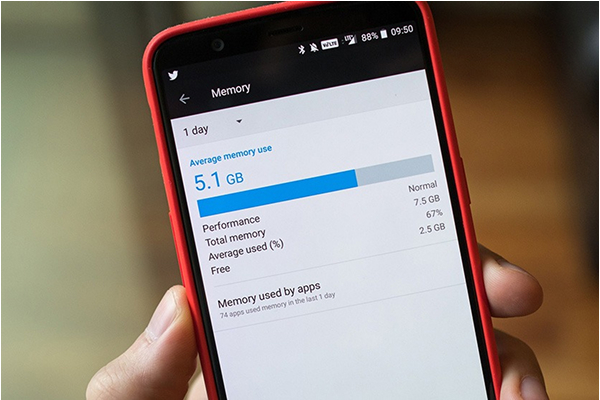
Well, the amount of RAM needed majorly depends on the kind of tasks you perform on your phones. Here is the full breakdown to help you understand. Take a look…
➣ 4 GB RAM: 4 GB RAM is a bare minimum in 2025. If you are a very light user, using your device only for basic purposes, such as web browsing, social media, calling and very light multitasking or if you are on a tight budget, then opt for a device with 4 GB RAM. Yes, RAM do cost money. Many entry-level models like the Samsung Galaxy A16 or Poco M7 include 4GB RAM. You can choose the one that fits your requirements well if you are looking for the best budget smartphone. However, it is worth noting that 4GB RAM will soon be outdated, so choose wisely!
➣ 6 GB RAM: 6GB RAM is again good for light users. If you use your phone only for web browsing, social media, light gaming and light multitasking, then 6GB is a good option. Many smartphones come with 6GB RAM, including Motorola G45, Samsung Galaxy A06, Redmi Note 14 Pro, Realme Narzo 80 and so on. However, it is worth noting that phones with 6GB devices start to act within 2–3 years of usage.
➣ 8 GB RAM: A major chunk of phone users opt for 8GB RAM. It is a decent amount of RAM that can help you indulge in multitasking, social apps, and so on. Even light gaming is possible with 8GB phone. You can enjoy games like Call of Duty Mobile on your device with 8GB RAM. Also, you can use AI easily. Some of the phones with 8GB RAM are, OnePlus 13, Xiaomi 15 and more.
➣ 12 GB RAM: 12GB RAMs are recommended for heavy multitaskers, gamers indulging in computationally demanding games, and power users who keep many apps or tabs open when using their devices. A 12 GB RAM makes all these activities a breeze. You can even create and edit 4K video or use demanding apps like Adobe Lightroom or CapCut on your phone. Most premium devices, such as the Samsung Galaxy S25 Ultra, Samsung Galaxy A55 5 G, Motorola Edge 60 and others come integrated with 12 GB RAM. Phones with 12GB RAM capacity easily work for 5-6 years.
➣ 16 GB RAM or UP: 16 GB and more is ideal for heavy content creators, gamers indulging in heavy games online, and for those who desire ultimate future-proofing. With 16 GB RAM, you can have your phone working for a pretty long time. Some of the devices with 16 GB RAM include Vivo X 200 Pro, Google Pixel 10 Pro, OPPO Find X8 Pro, Samsung Galaxy Z Fold7 1TB, OnePlus 13 R and so on.
So, which one is you?
The above section must have helped you understand the amount of RAM you need for the smooth functioning of your device. But what you need to know is how poor RAM can impact your overall experience. Let’s take a look at how a poor RAM can impact your phone’s performance. Here we go…
How Much Do You Actually Need?
It totally depends on the way you use your device. For instance, if you are a casual user who mainly use phone for messaging, social apps, streaming music, occasional video, and light browsing, then an 8 GB device is adequate for you in 2025. 8GB will allow you to indulge in moderate gaming, use multiple social apps or background streaming apps to stay resident. Many mid-range devices come along with 8GB RAM and we have listed some names as well in the above section.
Power users and professionals indulging in heavy multitasking, such as keeping multiple (like 12-15) tabs open, editing documents online, multitasking in split-screen and performing heavier background tasks, should opt for 12 GB devices. 12GB RAM will help you have a seamless experience when multitasking and prevent frequent app reloads.
Now comes heavy mobile gamers, digital content creators and future-proof buyers. They should always buy a device with 16 GB or more capacity. This capacity will allow you to indulge in large and heavy games without any glitches. Aside from that, using on-device AI toolchains will also become breeze. Moreover, a device with 16 GB RAM will work for several years without any issue. Most flagship phones in 2025 are coming with 16 GB or more RAM options for extreme multitasking.
What Happens When There Is Not Enough RAM?
Well, not having enough RAM will impact your phone’s functioning adversely. Here is how…
- Poor RAM significantly slows down your phone.
- Applications will take longer to open.
- Your device’s interface will be less responsive.
- Even the simplest tasks will take more time required.
- You will face problems even when browsing the web.
- Editing videos will be a task in the absence of enough RAM.
- Background apps will not be stored in the memory.
- Each time your apps will be refreshed or switched back when you not enough RAM.
- Games or heavy apps like video editors might fail to open or crash.
- You will be frustrated, and much more….
Is there any way to fix this?
Yes, there are ways to fix the issue. Read ahead for the ways…
What to Do in Case of Insufficient RAM?
When you have insufficient RAM, your phone will start to act up and trust that it will be very, really very annoying. But you don’t need to worry at all. Here are some practical tips to get rid of the issues that occurs due to insufficient RAM. Take a look…
1. Close Unused Apps or Programs
Whether you are using an Android device or an iOS phone, simply swipe away or force-close apps and programs that you are not actively using. Know that browser tabs or background programs eat memory faster than you can imagine. Closing them is the best solution to optimize the performance of your device.
2. Restart the Device
Restarting your device will simply clear temporary caches and memory leaks, providing you with enough space for the tasks that you wish to perform.
3. Disable or Uninstall Heavy Background Apps
Removing apps that auto-start or constantly sync in the background (such as widgets, certain social apps, or updates) can help save enough space. You can do it by visiting settings in your device and check “Startup” or “Background Apps” settings.
4. Keep Clearing Cache and Temporary Files
Caches and temporary files also eat memory of your device. Therefore, it is crucial that you keep clearing caches and temporary files from your device for better performance. Go to Settings → Storage and clear all temp files.
5. Minimize Browser Memory Use
Enable “tab snoozing” or “auto-discard” features to minimize browser memory use.
6. Run a Security Scan
Sometimes viruses or poorly written apps consume a lot of your phone’s memory. Running a security scan can help you get rid of the issue.
7. Use Virtual Memory
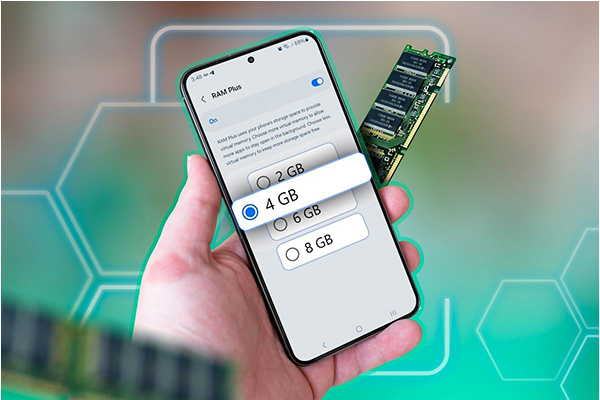
In 2025, many smartphones, such as Xiaomi, Realme, OPPO are coming with virtual RAM or “RAM PLUS.” This uses internal storage as backup memory. For instance, the Redmi Note 14 can add up to 4 GB virtually. If your phone also has this option, then make use of it. Of course, it won’t be as fast as physical RAM, but will help you with increased efficiency.
8. Optimize Visual Effects
Opt for lower animation settings to improve your phone’s memory. Aside from that, make sure to disable fancy visual effects for better performance.
9. Add or Upgrade Physical RAM (if possible)
If your device has the option to upgrade physical RAM, then opt for it. It will help you have improved performance.
10. Practice Efficient Usage Habits
Sometimes, practicing efficient usage habits, such as installing only IMPORTANT APPS, occasionally restarting your device, avoiding using heavy games, not indulging in heavy multitasking, and keeping your phone’s software updated, can help you have a seamless experience.
11. Use Lighter Versions of Apps
If your RAM is limited, then it is highly important to use the lighter versions of apps. For instance, instead of using standard apps opt for lighter versions, such as Instagram Lite, Facebook Lite, YouTube Go and so on.
12. Make Use of zRAM
Almost all Android devices come with zRAM, which you can use to enhance your phone’s performance. zRAM (a compressed block device in memory) enables the operating system to compress inactive memory pages instead of copying them to flash storage. This, in turn, lowers latency and wear on the storage drive and increases usable memory by 30 to 50%.
If nothing works for you, then it simply means that you need to upgrade your device. If you are using a 4 or 6 GB mobile, but your usage has increased significantly or if your device have become obsolete, then it’s better to opt for a device with higher memory. In 2025, you are advised to opt for at least 8 GB RAM and if budget is not a constraint, then go for 12 GB or more, because most phones now include AI capabilities and that require better memory.
Smartphone Market Trends in 2025
Ever since phones have become an integral part of human existence, the smartphone market has grown significantly. In 2025, more and more phone brands are now coming up with devices integrating higher RAM capacity. Some are even offering devices with upgradable RAM so that users can have a seamless experience. The average RAM in new Android phones rose from 6 GB in 2023 to 8 GB in 2025, per the most recent data.
Apple’s latest iPhone 17 series, which was unveiled on September 9, 2025, especially Apple iPhone 17 Pro and Pro Max include 12 GB RAM. You can expect to have increased memory in upcoming devices from all the major brands. While devices like Vivo X 200 Pro, Google Pixel 10 Pro, OPPO Find X8 Pro, Samsung Galaxy Z Fold7 1TB and OnePlus 13 R are already coming with 16 GB RAMs.
Future Smartphone Trends to Watch
More and more devices in the future are expected to include on-device AI and advanced features, ultimately requiring higher RAM. That’s the reason OEMs package 12–16 GB in new flagships for on-device workloads and other advanced features. Aside from that, more and more devices use LPDDR5x as default for flagship and even higher midrange tiers, offering increased memory bandwidth.
Buying Checklist
Not only RAM, but also other specifications matter. Here is your quick buying checklist to make a well-informed purchase in 2025 and in near future as well. Take a look…
- Focus on RAM Type: Both LPDDR4x and LPDDR5x are good enough; however, LPDDR5x offers better bandwidth and power efficiency. Hence, you are advised to choose a device with LPDDR5x (especially if budget is not a constraint).
- Powerful Processor: Powerful processors with integrated GPUs and SoCs can be game changers. These chipsets use RAM better.
- Storage Type and Speed: Storage type and speed matters. Hence, it is crucial to opt for devices with at least UFS (Universal Flash Storage) 3.1/4.0 for faster storage. It will improve virtual RAM and app load times.
- Refresh Rate: Opt for a device with a higher refresh rate (such as, between 90Hz and 120Hz) for smoother motion and a better visual experience, particularly in gaming. High-end devices even come with 144Hz refresh rate.
- Battery Capacity: A high RAM phone should have a battery capacity of 5000 mAh or more for more efficiency and smooth experience.
The Bottom Line
So, these are the RAM capacities phones come with in 2025. In 2025, a bare minimum of 6 GB RAM is recommended and if you are a power user or future-proof buyer, then consider at least 12–16 GB RAM device. Some mid-range phones even include 8GB RAM, which is ideal for moderate gaming and multitasking.
While for heavy users, it is advised to spend in flagship devices, such as iPhone 17, Samsung Galaxy S23 and above variant, ASUS ROG Phone 9 and so on. These phones include 12 GB or more RAM, required for smooth gaming sessions and heavy multitasking. Also, aside from RAM see other specs as well (we have mentioned in our quick guide) to make a well-informed decision. Remember that a phone with higher RAM (such as 16GB and more) can be used for more than 6-8 years. So, choose wisely!
FAQs
1. Is “virtual RAM” a good substitute for insufficient RAM?
Yes, a Virtual RAM is a safe substitute. However, you won’t get the performance that you get with physical RAM. Many brands have launched smartphones with “virtual RAM” or “RAM Plus” to repurpose a portion of internal storage as extra memory. Virtual RAMs do not provide DRAM like responsiveness. They are comparatively slower and can even increase wear on flash storage if constantly used. You can use them to reduce background app evictions. If you want your device to perform well, then you are advised to upgrade your phone’s memory (if possible) or your device.
2. Does higher RAM capacity affect battery life?
Yes, higher RAM capacity affects battery life. This is because more RAM draws more power. However, if you have a device with LPDDR5/5x RAM with SoC optimizations, then the impact remains minimal. Also, it is crucial to know that higher RAM will cost you more. Hence, you are advised to see your battery consumptions. Moving from 8 GB to 12 GB won’t impact much. But investing money on an extremely higher RAM just for the sake of battery life is not wise. Make sure to consider your usages, RAM type, processor, storage type and refresh rate before buying a device.
3. How can a higher-capacity RAM help?
A higher-capacity RAM can help you in ways you have never imagined, such as multitasking & app switching, gaming, photo and video editing, using on-device AI & next-gen features and much more. More RAM keeps more apps “alive” in memory, which prevents reloads and cut overhead, giving instant resumes and seamless experience.
4. How much RAM is recommended for a heavy multitasker and gamer?
Gamers, power users, heavy multitaskers and future-proof buyers should always go for higher RAM capacities, such as a minimum of 12 GB RAM or 16 GB RAM. Many phones even include 16 GB and more of RAM. If you are an extremely heavy user, then go for 16 GB or an upgradable memory device.
5. Is Virtual RAM as good as physical RAM?
No, Virtual RAM is not even at par with physical RAM. It does help, but not like physical RAM. It is slower compared to physical RAM. It doesn’t deliver DRAM-level responsiveness. You can still increase virtual RAM for saving occasional background states.