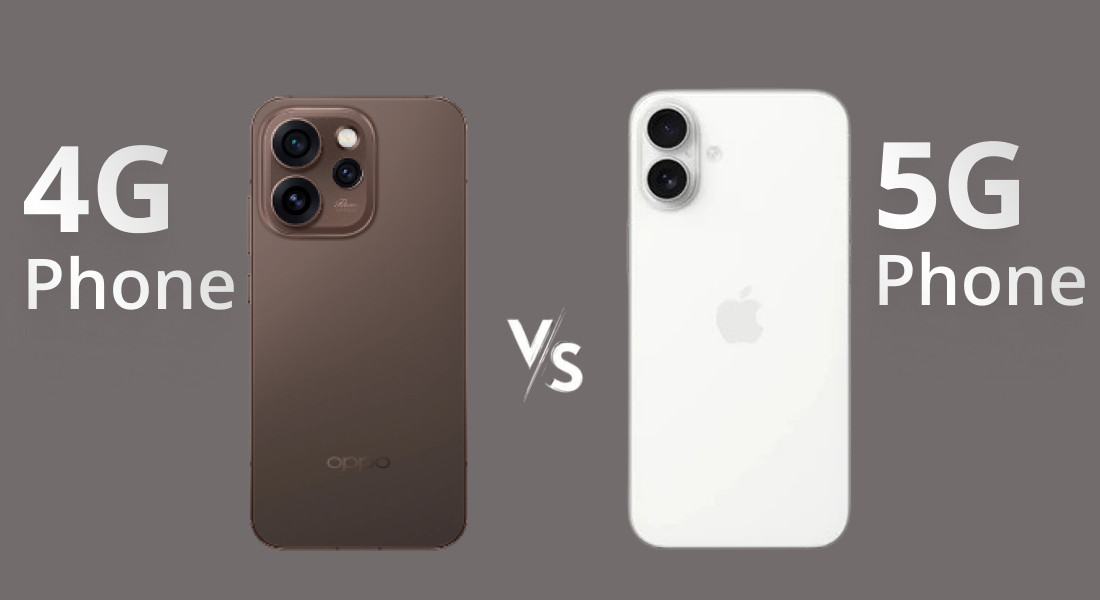
One of the most talked upgrades for smartphone technology has been the launch of 5G. As more and more countries around the world roll out 5G networks, many consumers are asking themselves whether they need a new phone that can use 5G or not.
Since 5G devices are significantly more expensive than previous generations of smartphones that use 4G, it is an important question. This article will explore some fundamental differences between 5G and 4G devices.
The advantages offered by using a device on the 5G network, some disadvantages associated with 5G technology and whether it would be best for you to upgrade to a new phone now or if you can wait until later before upgrading your current device to one that supports 5G.
What is 4G?
4G (Fourth Generation) is the current standard of mobile telecommunications technology. 3G was replaced by 4G in the early 2010s and dramatically increased the speed of mobile data transfer and improved the reliability of networks while providing users with a better mobile internet experience than ever before.
With 4G enabled devices, you can expect download speeds between 10 Mbps and 100 Mbps based on your location and individual network conditions, which makes it possible to use HD video streaming, gaming phones and video calls as everyday functions and therefore 4G serves as the foundation for many mobile applications today.
Key Features of 4G:
- Download speeds: Typically up to 100 Mbps.
- Latency: Around 30-50 milliseconds.
- Coverage: Good in urban areas with widespread availability.
- Applications: Video calls, HD streaming, gaming, and web browsing.
What is 5G?
5G is the fifth generation of mobile connectivity. Therefore, 5G networks are designed to provide ultra-fast, ultra-low latency and enormous amounts of connections for mobile devices connected to them.
The key difference between 5G networks versus their predecessors (4G networks) will be the tremendous increase in speed and functionality. 5G has promised to deliver resources for any future technological development through fully functioning autonomous vehicles, fully automated smart cities, and fully connected IoT ecosystems.
Key Features of 5G:
- Download speeds: Up to 10 Gbps.
- Latency: As low as 1 millisecond.
- Coverage: Still being rolled out globally, with faster coverage in some cities.
- Applications: Autonomous vehicles, IoT, 4K/8K video streaming, AR/VR, real-time gaming.
5G vs 4G – The Key Differences
1. Speed and Performance
- 5G: As we have already noted, 5G’s biggest benefit is its speed. It can provide users with 1 Gbps (or greater) under normal conditions and potentially as high as 10 Gbps when conditions are just right. This translates to faster data transfer for many things, including downloading applications faster from the app store, uploading photos and videos faster and an improved overall experience when streaming video or playing games on your phone by dramatically reducing buffering and lag time associated with video production.
- 4G: Most people already know 4G is faster than what most consumers will ever need for everyday tasks, but in comparison with 5 G, the comparison falls short. In ideal situations, the average 4G user will receive download speeds of approximately 10 Mbps and maximum rates of 100 Mbps. These are good speeds for most activities. However, once you start using large quantities of data, such as watching 4K movies or playing games that use immersive graphics, your speed will probably not meet your requirements.
2. Latency (Response Time)
- 5G: The introduction of 5G technology has significantly decreased latency to approximately 1 millisecond (ms). The reduced amount of lag creates an improved level of responsiveness to online gaming, video conferencing and real-time communications with virtually no delay. For applications involving autonomous vehicles, the low latency of 5G will be vital for making quick decisions.
- 4G: Average latency on a typical 4G network ranges from 30ms to 50ms. Latency is acceptable for most day-to-day tasks. However, you may experience delays when using high-quality video calling and gaming applications.
3. Network Capacity and Coverage
- 5G: 5G networks are being built for the purpose of providing significantly more capacity for the entire network than any other technology before it, allowing an unprecedented number of devices to connect at faster speeds than they could before. With billions of Internet of Things (IoT) devices, smart cities and high-density areas (such as stadiums and airports), this will prove to be critical to provide faster services than ever seen before. However, as of this writing, 5G is still an emerging global technology and is not yet available worldwide.
- 4G: 4G networks have existed for many years and have been deployed around the world. For the most part, 4G networks are well-known and widely available, but with such a rapid growth in the number of people and devices connecting at once to the internet via 4G, congestion is happening and will continue to happen for many years to come. As a result, people in rural areas of the world are still heavily dependent on using 3G and 4G services.
4. Battery Life
- 5G: Critics claim that early-adopter 5G smartphones consume nearly twice as much battery while trying to stay connected to 5G networks. This is particularly concerning in areas with limited availability of 5G, as devices use constant searching for available connections.
- 4G: In general, 4G devices have a significantly longer-lasting battery than 5G devices in their early stages. Mature 4G technology has much better stability on the network as well as less battery drain than 5G tech.
Comparison Table: 4G vs 5G – Key Differences Explained
| Feature | 4G | 5G |
|---|---|---|
| Speed | Up to 100 Mbps (peak) | Up to 10 Gbps (peak) |
| Latency | 30-50 milliseconds | As low as 1 millisecond |
| Download Speed | 10-100 Mbps | 100 Mbps – 1 Gbps (average) |
| Upload Speed | 10-50 Mbps | Up to 1 Gbps |
| Network Capacity | Can handle thousands of devices per square kilometer | Can handle millions of devices per square kilometer |
| Coverage | Widespread, especially in urban and suburban areas | Still rolling out, patchy in many areas |
| Applications | Streaming HD video, gaming, social media | 4K/8K video streaming, VR/AR, autonomous vehicles, IoT |
| Device Support | Smartphones, tablets, wearables | Smartphones, wearables, IoT devices, smart cities |
| Battery Consumption | Moderate | Higher in early 5G devices (due to constant 5G connection) |
| Network Type | LTE (Long Term Evolution) | Sub-6 GHz (mid-band), mmWave (high-band) |
| Global Availability | Well-established globally | Limited but expanding rapidly, especially in urban areas |
| Real-World Usage | Suitable for most daily tasks (browsing, calling, HD video streaming) | Ideal for high-demand applications (real-time gaming, AR/VR, large-scale IoT) |
| Price Range | More affordable | Typically higher due to new technology |
Pros and Cons of 4G vs 5G: A Quick Comparison
4G: Fourth Generation
Pros:
- Available globally, especially in urban and suburban areas.
- 4G smartphones are budget-friendly.
- Excellent for browsing, social media, HD streaming, and video calls.
- Less power-hungry compared to 5G devices.
- Reliable and mature, with solid network infrastructure.
Cons:
- Not ideal for data-heavy tasks like 4K/8K streaming or high-speed gaming.
- Can cause delays in real-time activities like gaming or video conferencing.
- Slower speeds in crowded areas or during peak times.
- May struggle with future tech like IoT and autonomous vehicles.
5G: Fifth Generation
Pros:
- Up to 100x faster than 4G, great for large downloads and streaming.
- Instant response times ideal for gaming, real-time applications, and remote surgery.
- Supports millions of devices simultaneously, perfect for IoT and smart cities.
- Designed to support future tech like AR/VR, autonomous vehicles, and connected devices.
- More reliable in dense locations like stadiums and cities.
Cons:
- Still rolling out, not yet available everywhere (especially in rural areas).
- More expensive devices and service plans. This is particularly relevant for users who are considering whether to stretch their budget toward the best 5g phone under 20000 category or stay in lower-priced options.
- Early 5G phones consume more power. This can be more noticeable in compact budget devices, including models in the 5g phones under 10000 range, where battery optimization is often limited.
- Not all apps and networks fully support 5G.
- 5G towers and networks are still being built in many areas.
Final Verdict
There is no question that 5G will be key in the next generation of mobile connections. However, it isn’t essential immediately for all end users. For the majority of people, a current 4G connection offers sufficient speed, consistency and reliability. As more infrastructure is in place for 5G support and the requisite devices are released, the advantages of upgrading will become more evident.
Until that point, a decision to transition to the fifth generation ought not be driven by a need for the additional bandwidth but rather by fear of testing or purchasing the next best thing.