If you have ever noticed new Android phones, come with pre-installed applications? Most of the time we don’t even need them. These apps are known as bloatware and they take up valuable storage, consume system resources and sometimes even run in the background. All of these can significantly affect the two most important aspects of your phone: its performance and battery life.
Some of these apps may turn out to be important for the device to function properly, but not all. Hence, in such a situation, it becomes essential to remove these apps. And good news is – these apps can be removed or disabled without much effort. In this post, we will discuss everything about Bloatware on Android along with the methods to safely remove it. So, without any further ado, let’s get started…
What Is Bloatware?
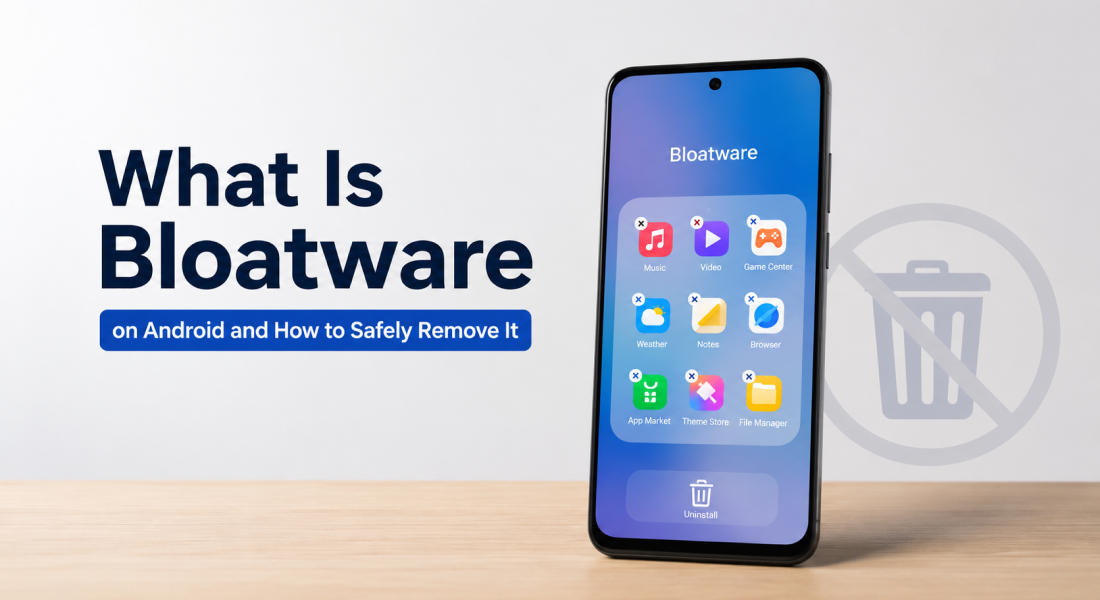
Bloatware is software that comes pre-installed on a smartphone, tablet or computer. Some of these apps may be useful for the proper functioning of the device; however, most of them are rarely used. This makes it crucial to remove them as they take up storage space and affect phone’s performance.
Bloatware usually refers to the extra apps. They are often added for promotional purposes or brand partnerships rather than to improve your experience. Some of the examples of Bloatware on Android include, shopping apps, games, music services, weather apps or trial versions of paid software. The ones you use are only the ones that you need in your device, rest will only occupy space and may continue running in the background. Hence, you should remove bloatware from your system to keep your device cleaner and more organized.
NOTE: It is important to note that not all pre-installed apps are bloatware. These apps include phone dialer, camera, messaging app and system settings.
How Bloatware Affects Your Phone’s Performance and Storage
When you buy a new smartphone, you expect it to be fast, responsive and ready to use. Before upgrading, using a mobile compare resource to review hardware specifications and software support across different models can help you choose a device with fewer compromises.
However, the pre-installed applications in a new device can affect its performance greatly. These apps, often called bloatware, can quietly affect your phone’s performance, storage and battery life. Of course, not all pre-installed apps are Bloatware. Some of the are useful but most of them take up space and continue running in the background without adding much value.
Here are some of the problems this can cause:
- Bloatware can make your phone feel slower over time.
- Every pre-installed app occupies valuable storage space.
- Background activities consume battery power throughout the day.
- Many pre-installed apps continue syncing data, checking for updates or sending notifications even when you’re not actively using them.
- Background activities quietly consume mobile data.
- Keep sending unnecessary notifications, such as promotional offers, news updates, shopping alerts or reminders.
- Adversely affect gaming, multitasking and overall performance.
- Some apps may request access to your location, contacts, or other information even if you never use them.
How to Identify Bloatware on Your Device
Identifying Bloatware is not always easy because it doesn’t always make itself obvious. Often, it sits quietly in the background, using storage, memory or battery without you realizing it. So, here are some simple ways to identify Bloatware; take a look…
- Look for applications that you never installed in the first place. These may include duplicate web browsers, shopping apps, games, social media apps, or manufacturer-specific services.
- Check the apps that you rarely or never use. Many pre-installed apps remain untouched from the day you bought the phone.
- If your phone runs low on space, then track storage usage and check which apps are taking up space.
- If your phone’s battery runs out quickly, check the Battery section in Settings to find apps that are using too much power. If battery issues continue despite removing or disabling unnecessary apps, it could be a sign that it’s time to consider a trending phone with a more efficient processor and a larger battery.
- If an app is constantly active without serving a clear purpose, it could be unnecessary.
- If an app sends you frequent notifications without you looking for them, then it may be worth disabling or removing.
- Look for apps that perform same tasks, often known as duplicate applications.
Let’s now take a look at different methods to disable or remove Bloatware safely from your device. Here we go…
How to Disable or Remove Bloatware Without Rooting
Here are some of the easiest ways to remove or disable Bloatware without Rooting from your system. Take a look…
1. Disable Apps from the Settings Menu
The easiest and safest option to get rid of the Bloatware is to disable the app from the settings menu. Here is how you can do it:
Steps:
- Go to Settings
- Open Apps or Apps & Notifications
- Tap See all apps if required
- Now, select the app you want to remove
- Tap the Disable button (if available)
- Lastly, confirm your choice
Once disabled, the app will no longer appear in the app drawer. Also, it will stop running in the background and won’t receive updates.
2. Uninstall Available Pre-Installed Apps
Some Android devices allow you to uninstall previously installed apps. You can take advantage of the feature and get rid of the Bloatware permanently.
Steps:
- Open the app information page
- Tap the Uninstall button to get rid of the bloatware
- Confirm the removal
Doing so will completely remove the app from your device.
3. Remove Apps Using ADB (No Root Required)
If you are unable to disable the app, then you can use ADB (Android Debug Bridge) to remove it without Rooting.
For this, you’ll need:
- A Windows, Mac or Linux computer
- A USB cable
- Android Platform Tools installed
- USB debugging enabled on your phone
Steps:
- Enable Developer Options
- Now, turn on USB Debugging
- Connect your phone to your computer
- Open the command window inside the Platform Tools folder
- Find the package name of the app you want to remove
- Use the uninstall command for your device
NOTE: The app will be removed only for your user account, not from the phone’s system partition. This means you can restore the app in future if you want it.
4. Turn Off Unwanted Permissions
Another thing that you can do is to turn off all unwanted permissions because some apps cannot be disabled because they are linked to core system functions. This way, you can reduce their impact by limiting what they can access.
Steps:
- Turn off notifications
- Remove location access
- Disable background activity
- Block mobile data and Wi-Fi usage
- Restrict battery usage
Taking these steps will not remove the app but will prevent it from consuming unnecessary resources.
5. Hide Apps You Don’t Want to See
Lastly, if you cannot disable a Bloatware, you can still hide it. Some Android phones come with the option to hide apps from the home screen or app drawer. You can use this feature to keep your phone cleaner and more organized. Whenever you want, you can even unhide them.
So, which apps should you avoid uninstalling? Let’s find out.
Apps You Should Not Remove (Even If They Look Like Bloatware)
Not every pre-installed app is Bloatware. Some pre-installed applications come with phones for reason. Removing them can affect important features, reduce performance, cause unexpected issues or even interfere with software updates.
These apps include:
- Phone, Calls and Contact Apps
- Messaging Apps
- System Interface
- Google Play Services
- Google Play Store
- Security Features
- Software Update Apps
- Backup and Restore Apps
- Device Care Apps
- Device Settings
- Camera Services
- Accessibility Services
- File Manager
- SIM Toolkit or Carrier Services
- Digital Wellbeing
- Accessibility Services
- Security or Antivirus Apps from the Manufacturer
So, these are the essential system apps that make sure your device performs best. Avoid removing or disabling them as they can cause certain features to stop working or make your phone unstable.
The Bottom Line
So, this is all about Bloatware and the methods to safely remove it. Bloatware may not seem like a major issue at first; however, over time it can affect your phone’s speed, storage, battery life and overall experience. And that’s when it becomes imperative to remove or disable Bloatware on Android. Doing so makes your device run more smoothly and free up space for the things that matter most.
The best thing is you don’t need to root your Android phone to get rid of unwanted apps. The methods outlined above are efficient and easy enough to follow. Using these methods, you can instantly free up resources and reduce clutter. However, you are advised to take a moment to understand what each app does before you disable or remove it. This way, you would be able to have a cleaner, more organized and better performing device at all times.
FAQs
1. Is a Bloatware Bad?
Not always. Some of these applications are included in a device so that your device functions properly. But the thing is no matter whether they are useful or not, they occupy storage space, run in the background and that affects performance and battery life. So, removing unwanted applications become essential in such a situation.
2. Can I Remove Bloatware?
Well, it largely depends on the phone you own. Some pre-installed apps can be removed completely, where others can only be disabled. Disabling any application from your device prevents it from running in the background and removes it from the app drawer. But it still occupies some storage in your device. So, if removing an app is not the option, then disabling the app the best choice for users.
3. Can I Restore Removed Apps?
Absolutely, you can. You always have the option to enable the apps that you have already disabled from Apps settings. And that apps removed using ADB can also be restored without resetting your phone. Even a factory reset can bring back all original system apps.
4. Does Removing Bloatware Improve Performance?
In most cases yes. This is because a bloatware uses valuable storage space, keeps running in the background and consume power. Removing or disabling an unwanted app helps you free up storage, fewer background processes, improved battery life, reduced RAM usage, fewer unwanted notifications and a more organized app drawer.
5. Is It Safe to Disable Bloatware from the Setting Menu?
Yes, disabling apps through the Settings menu is completely safe. Even using ADB is also safe when you remove only apps you recognize. The idea is not to delete any app that help your device function properly. Hence, it is crucial to be mindful when deleting the app. And if you are really not sure, disable it before removing it.
6. Which Apps Can Usually Be Removed?
Apps that you don’t use frequently or the ones that are affecting your phone’s performance and battery life should be removed. However, it is crucial to first understand the purpose of the app before removing it. Doing so will save you from unexpected problems later.