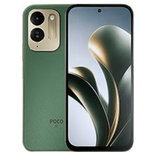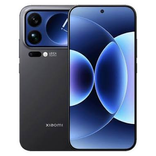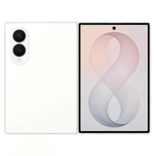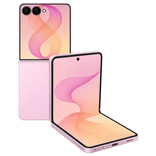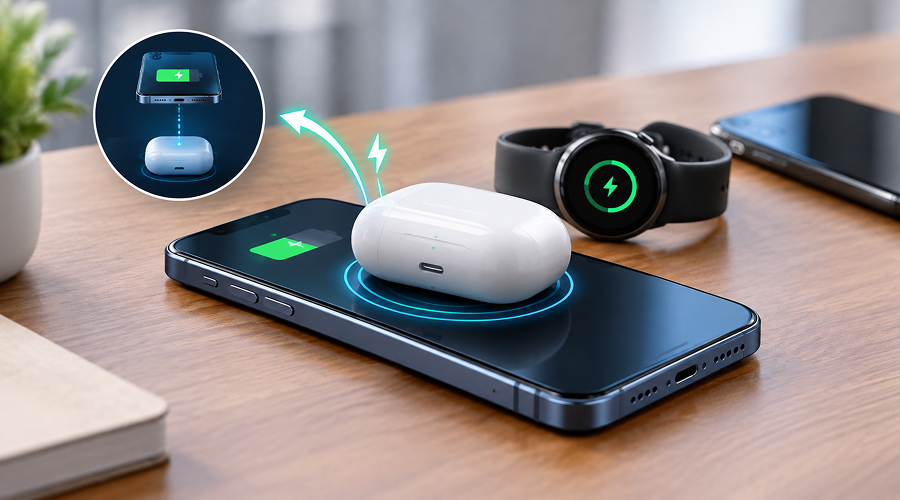
Many smartphones now support wireless charging, allowing users to charge their phones by placing them on a compatible charging pad. But some phones take wireless charging a step further with reverse wireless charging. Reverse wireless charging allows your smartphone to wirelessly charge another compatible device. Your phone works like a small wireless charger. You can place earbuds, a smartwatch or another phone on its back to share battery power. It is undoubtedly a useful feature, but it leads to an important question: Is reverse wireless charging practical, or just a feature on paper? Read this post to find out…
What Is Reverse Wireless Charging?
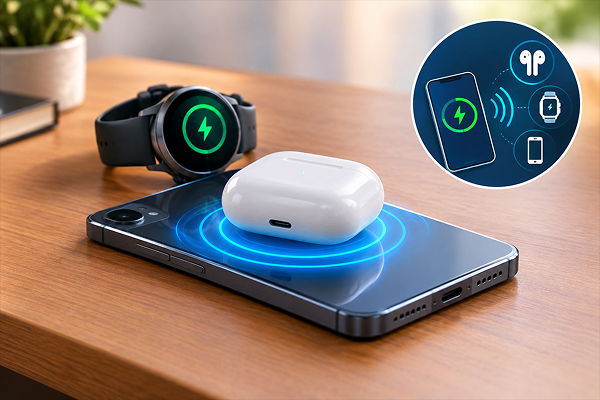
Reverse wireless charging is a feature that many smartphones include. It allows a smartphone to share some of its battery power wirelessly with another compatible device. Normally, a phone gets power from a charger. With reverse wireless charging, it can share its battery with another device as well. You can charge compatible earbuds, smartwatches and even other phones with this technology.
All you have to do is to place the device on the back of your phone to transfer power without a cable. This feature can be useful when your earbuds or another small device is running low and you don’t have the charger nearby. But it’s worth noting that charging another phone with reverse wireless charging usually takes much longer than using a cable or regular wireless charger.
How Does Reverse Wireless Charging Works
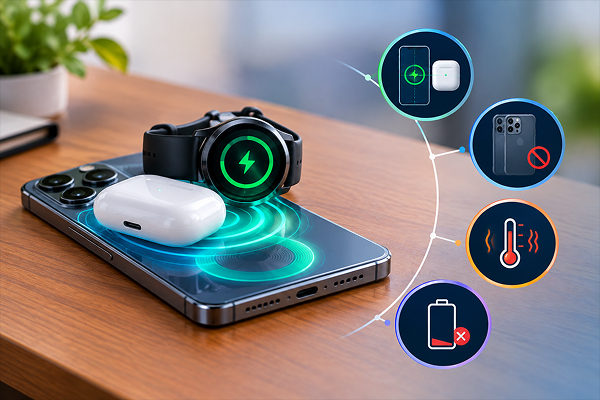
Reverse wireless charging uses the same basic wireless charging principle that your phone uses when charging from a wireless pad. A wireless charger uses an electromagnetic field to transfer power to a device. With reverse charging, your phone can send power instead of receiving it. When you turn the feature on, the back of your phone becomes the charging surface. The moment you place a compatible device on the back of your phone it starts charging.
Key Factors to Consider
- Position: It is crucial to place your device in the right position because the charging coils need to align properly. If the device is off-center, charging may slow down or stop.
- Thick Phone Cases: Thick or metal phone cases also affect charging. Some manufacturers recommend removing accessories that may interfere with wireless charging.
- Heat: Heat is yet another consideration. Wireless charging can lose some energy as heat, so your phone may become warm while sharing power.
- Automatic Shut-Off: Most phones automatically stop reverse charging when the battery gets low or the phone gets too hot.
What You Can Actually Charge with It
Reverse wireless charging comes in handy when you have to charge small accessories, such as compatible earbuds and their charging cases. These are amongst the best devices to charge with reverse wireless charging technology. This is because these devices house small batteries and they do not need much power to start working again.
Besides that, compatible smartwatches can also be charged with reverse wireless charging. However, compatibility can vary by phone and brand. A smartwatch may support wireless charging but still not work with your phone’s reverse charging feature. You can even charge another smartphone if it supports compatible wireless charging standards. However, it is worth noting that charging a phone with another phone can take a long time, so it is best used only in emergencies when the battery is very low. This is because some energy is lost while transferring power from one phone to another.
IMPORTANT NOTE: Some phones support charging for small wireless accessories, but this depends on the phone and device. So, check compatibility before using reverse wireless charging. Just because a device supports wireless charging does not mean it will work with every phone.
How Much Power Does It Actually Deliver?
Reverse wireless charging is a useful feature but it has its own limitations. Reverse wireless charging does not provide power like wired chargers do. It usually offers around 2.5W to 10W. This makes reverse charging much slower. That’s the reason, users are advised to use reverse wireless charging technology only in case of emergencies. It does not provide fast charging. Small devices like earbuds need very little power, so even slow charging can be useful. However, charging a large phone battery this way can take a long time.
Besides that, charging efficiency also varies. The amount of power that actually reaches the second device will be lower than the energy taken from your phone because some energy is lost as heat and during wireless power transfer. This is why reverse wireless charging should be considered an emergency charging option rather than your main charging method.
Does Using Reverse Wireless Charging Drain Your Battery Fast?
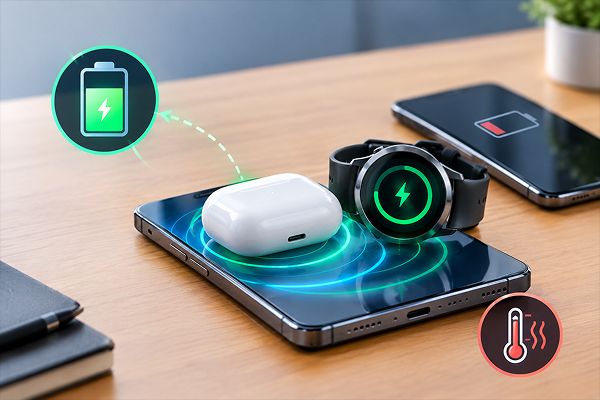
Yes, it can drain your phone’s battery faster than you can think, especially when you use it to charge another smartphone. Understand that when you charge another smartphone with your phone, it has to supply more energy than the receiving device ultimately gets. As a result, reverse charging another phone reduces your own battery level relatively quickly.
The impact is too little when you charge a small device such as wireless earbuds. This is because small devices require too less power and short charging sessions. A short charge can give your accessory enough power to last for several hours.
Some phones even include safeguards to automatically switch off reverse wireless charging when your phone’s battery falls below a certain level or if the device becomes too hot.
IMPORTANT NOTE: Reverse wireless charging can be a great option if your phone has enough battery to share. However, if it has only 10–15% battery left, avoid using it to charge other devices, especially another phone.
Which Phones Have It and Is It Worth Prioritizing?
Reverse wireless charging is mostly found on premium and higher-end smartphones and its availability varies by brand and model.
Several Samsung Galaxy flagship devices offer reverse wireless charging feature called Wireless PowerShare. Some Google Pixel models also offer this feature, called Battery Share. Besides that, Xiaomi, OnePlus and Huawei also offer reverse wireless charging on selected devices. So, if you are looking for a device with reverse wireless charging, then check the specifications of the exact model you are considering.
Should Reverse Wireless Charging Influence Your Buying Decision?
Reverse wireless charging is undoubtedly a great feature to consider. However, you should not completely rely on it. It is useful if you often use wireless earbuds or other accessories. Furthermore, evaluating overall mobile specs before buying can ensure you pick a handset that truly matches your daily power and accessory needs. However, battery life, camera quality, charging speed, software support and reliability are more important features to consider when buying a smartphone.
The Bottom Line
So, this is all about reverse wireless charging. It is a useful feature on many flagship phones and can be helpful when another device is low on power. It eliminates the need to carry a separate wireless charging pad for charging compatible earbuds, smartwatches or another phone a quick boost. Your smartphone can act as a backup power source. Its main drawbacks are slow charging and lower efficiency. It also uses more energy and can make your phone warmer.
So, is reverse wireless charging actually useful?
Yes, but mainly as an emergency feature. It is useful for giving earbuds and other small devices a quick boost, but it cannot replace a regular charger or power bank. Consider it a useful extra, not a must-have feature. You can consider a phone with reverse wireless charging if it has a large battery with enough power to share without risking your own daily usage.