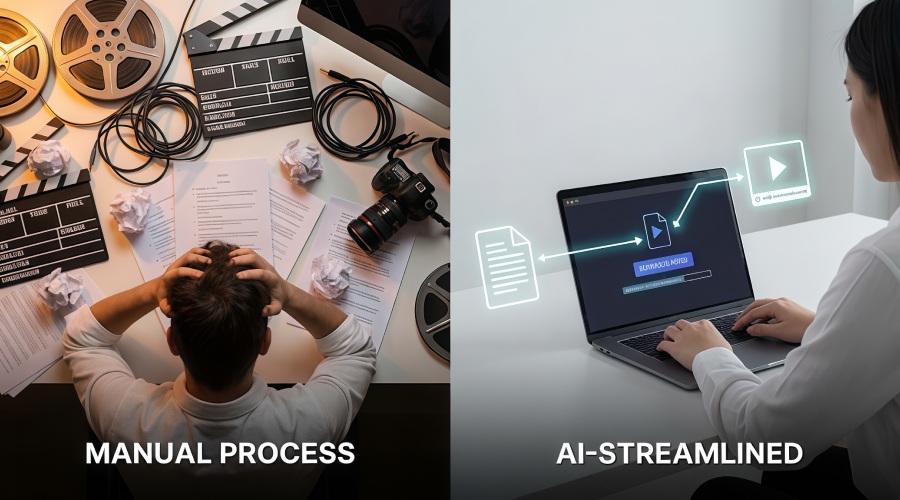
Creating internal training videos has traditionally been a resource‑intensive task. Employees with subject‑matter expertise need to coordinate with video producers, scriptwriters, and editors. This process can take days or weeks—even for short instructional segments—and often requires tools and skills not readily available within operating teams.
Emerging AI video generation technologies are beginning to shift this dynamic. These systems can turn textual content and static images into coherent video narratives, reducing reliance on manual production workflows and enabling organizations to scale learning materials more efficiently.
Why Training Videos Matter

Training videos are a common component of employee onboarding and skills development. As explained in discussions around instructional design, multimedia learning can enhance retention by presenting information in visual and auditory formats instead of text alone. According to research in educational psychology, combining words and pictures fosters better understanding than either modality by itself.
However, producing video content manually remains a hurdle for many organizations, particularly when subject experts must also serve as content creators.
The AI Video Generation Approach
Instead of relying on traditional video editing software—even though tools like these remain central to professional workflows — AI video generator uses machine learning models to interpret structured input and generate video sequences with minimal human intervention.
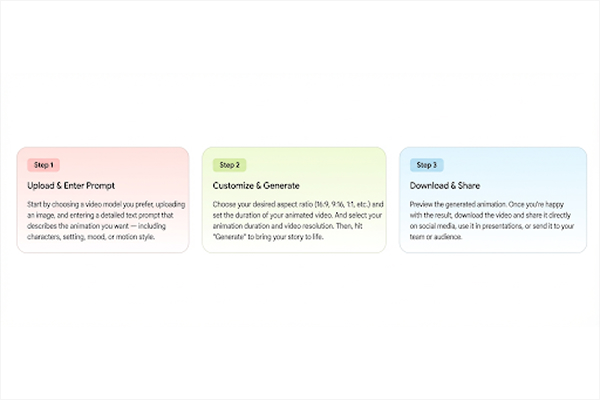
These models draw on advances in natural language processing and generative visual modeling to produce frames that align with narrative descriptions or visual cues. For internal training needs, this means text from a lesson plan, compliance guideline, or procedural document can be translated into a sequence of instructional visuals.
A number of platforms provide interfaces for this process. For example, AI Ease, PicLumen support text‑to‑video and image‑to‑video workflows, allowing users to input text prompts or images and obtain generated video output without traditional editing steps.
A Practical Workflow for Training Video Generation
A typical AI video generation workflow for internal training content might look like this:
- Draft a lesson script: Write clear, structured text that outlines the points you want to cover.
- Gather visual assets: Collect diagrams, charts, or illustrations related to the topic.
- Choose a generation tool and model: Select a system that supports both text and image inputs.
- Configure output settings: Set aspect ratio, duration, and other parameters appropriate for your platform (e.g., corporate LMS or intranet).
- Generate video: Run the generation process and review the results for accuracy and clarity.
In many cases, this method produces usable training content in a fraction of the time required by traditional production.
Also Read: Best AI Image Generators
Benefits for Internal Learning Teams
Using AI to generate training videos can offer several operational benefits:
- Speed: Content that once took days to produce may be generated in minutes.
- Consistency: Organizations can apply standardized templates or prompts to maintain uniformity across videos.
- Accessibility: Subject‑matter experts can focus on instructional content without needing video editing expertise.
These advantages can help reduce the backlog of training content requests and improve the responsiveness of learning and development teams.
Considerations and Best Practices
While AI video generation is a powerful tool, it’s important to consider quality controls. Generated videos should be reviewed for instructional clarity and accuracy, especially in regulated fields such as healthcare, finance, or safety training.
Additionally, organizations should ensure proper handling of any proprietary or sensitive information used as input to avoid unintended exposure.
Conclusion
AI video generation is transforming how internal training videos are created by enabling teams to generate visual content directly from text and images. By reducing dependence on specialized production workflows, organizations can scale their learning materials more efficiently while freeing subject matter experts to focus on content quality and instructional design.
As AI continues to evolve, tools that support intuitive, text‑based video creation will likely play an increasing role in corporate learning ecosystems.