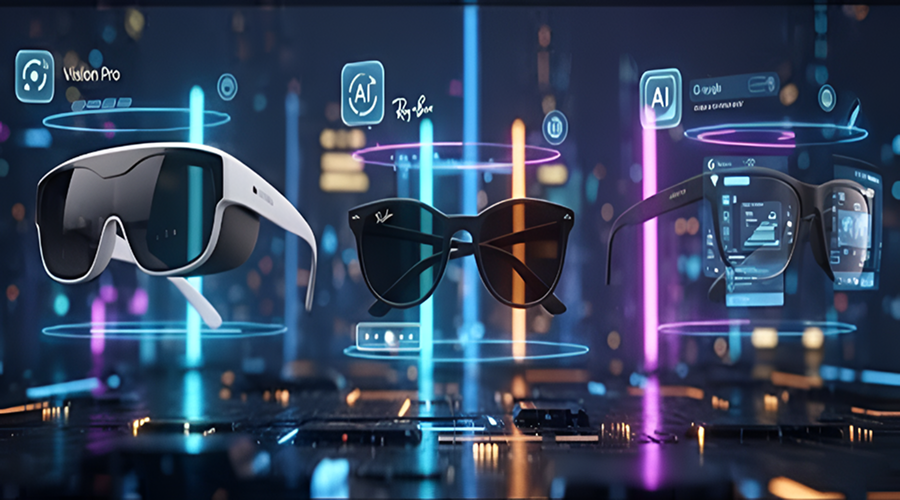
The AR glasses race is on with all the advanced wearables such as Apple, Meta and Google are all set to reshape how we interact with the digital world. The AR glasses of Apple are rumored to be named “Apple Glasses” and launching in 2026 or 2027 will seamlessly integrate with the Apple ecosystem by offering a sleek and high-performance experience. Meta AR glasses are developed with Ray-Ban and have already launched on 30th September 2025, it focuses on social interaction and AI by combining fashion with smart features. AR glasses of Google are expected in 2026 and it will lean heavily on AI for practical uses like navigation and real-time translation which are tied to Google’s ecosystem.
In this article, we will have a look into key features, pros and cons of each, comparing how these AR giants stack up against each other.
Key Features Comparison
| Feature | Apple AR Glasses | Meta AR Glasses | Google AR Glasses Edition 2 |
|---|---|---|---|
| Launch Date | Rumored in 2026 or 2027 | 30th September 2025 | Rumored in 2026 |
| Display Type | MicroLED or OLED, Full-color | Single LCD monocular | 640×360 RGB display |
| AI/Processing | Apple Silicon chip, powerful AR capabilities | AI integrated with Meta’s social platforms | Qualcomm Snapdragon XR1 platform |
| Design | Sleek, minimalistic design | Ray-Ban-style, fashion-forward | Glasses-like form, sleek but practical |
| Battery Life | 4-6 hours (estimated) | 18-hour battery life | 800 mAh with fast charging capability |
| Connectivity | Seamless Apple ecosystem integration | Meta/Facebook integration, social media features | Google ecosystem, enhanced with AI tools |
| Camera/Video | Front-facing camera for AR interactions | Front-facing camera for AR and wired video DisplayPort via USB-C | 8 Megapixel color sensor, records up to 1080p30 video |
| Voice Assistants | Siri integration | – | Google Assistant |
Overview of Each AR Glasses
Apple AR Glasses
AR glasses from Apple are expected to represent a seamless blend of technology and style by leveraging the vast ecosystem of Apple. It has built a reputation for producing sleek and user-friendly devices, its AR glasses are likely to follow that same path. With a focus on delivering immersive AR experiences, these AR glasses are expected to rely heavily on the power of Apple’s custom-designed chips and work as an extension of existing Apple devices such as the iPhone, Mac and Apple Watch, creating a tightly connected mixed-reality experience.
Apple’s Vision: Apple has always emphasized the importance of privacy, user-centric design and seamless integration. The AR glasses will likely integrate a wide range of features such as real-time navigation, object recognition and potential holographic projections.
Meta AR Glasses
Meta AR glasses are focused on social interaction, leveraging the power of its social media platforms such as Facebook, Instagram, WhatsApp, etc. and a VR ecosystem. These AR glass has been developed in collaboration with Ray-Ban, bringing fashion and practicality together. It will likely feature a transparent display that overlays digital content onto the real world as well as integrate AI to enhance social experiences.
Meta’s Vision: Its primary goal is to create an immersive social and digital experience. The glasses will likely allow users to interact with virtual objects and environments, receive real-time updates from social media and possibly even make phone calls or send messages directly from the glasses.
Google AR Glasses
While Google has been involved in AR since the launch of Google Glass in 2013, that was a product with limited success. The next edition, 2.0, coming in 2026 is expected to build on this experience, focusing on practicality and productivity.
Google’s Vision: AR glasses of Google are likely to serve as an extension of the strong search and AI capabilities of Google, targeted at pragmatic use cases such as real-time navigation, smart assistance and language translation. They can also be integrated with Google Assistant for an even smarter and more connected experience.
Pros and Cons Comparison
Apple AR Glasses
Pros:
- This will highly interconnect the experience with the iPhone, Mac and Apple Watch through seamless integrations.
- It will most probably make these glasses sleek and fashionably apt with its attention to aesthetics.
- Expected to feature powerful AR and processing capabilities, thanks to Apple’s custom silicon chips.
- Its commitment to privacy could ensure the security in handling user data.
Cons:
- AR glasses might be priced at a premium, which may reduce accessibility to some users.
- Considering Apple’s tradition of producing high-performance devices, the battery life may not last as long as some other competitors.
- Initial releases might be more AR-centric, whereas more advanced features would come along a bit later.
Meta AR Glasses
Pros:
- Seamlessly integrated with Meta’s social platforms allowing for direct interaction and sharing.
- The partnership with Ray-Ban ensures that the glasses are fashionable and approachable.
- AI-powered features could enhance the user experience, from personalized content to location-based AR.
Cons:
- Its track record with user data may make some users hesitant about adopting these glasses.
- If the focus is too heavily on social media, the glasses may lack the utility that other AR devices offer.
- The inclusion of always-on AI features may drain battery life quickly.
Google AR Glasses
Pros:
- The AI capabilities of Google are strong making these glasses ideal for productivity tasks and real-time information.
- Real-time translation could be a game-changer for travelers and international users.
- Designed to enhance daily life, from navigation to task management, Google’s AR glasses have a clear focus on utility.
Cons:
- While sleek, Google Glass has historically struggled with comfort and style. Users may find the glasses bulky or too techy.
- Although Google has a vast ecosystem but it might not be as integrated as Apple’s, which could limit its appeal to users outside of Google’s services.
- AR capabilities might initially focus more on practical uses rather than immersive AR experiences.
Conclusion
The race to develop the ultimate AR glasses is heating up, with Apple, Meta and Google each bringing something rather different to the table. Sleek design and seamless integration of Apple into its ecosystem will no appeal to dedicated Apple users, while the socially-focused approach that Meta has taken to its device by partnering with Ray-Ban seals the deal that its glasses could be both stylish and socially integrated. Additionally, Google’s productivity-focused, AI-driven glasses promise to be a real tool in the everyday lives of users.
Ultimately, who wins in the AR glasses race will come down to user preferences, the evolution of technology and how each company’s vision for augmented reality shapes out