In the last few years, foldable phones have improved significantly. What began as a niche experiment is now a serious part of the Samsung line. The Galaxy Z Fold demonstrated how a phone can become a tablet. The Z Flip demonstrated that folding can be entertaining and trendy as well.
The news leaking through the technology communities is that Samsung is about to make its most daring step ever, a three-fold device, which can fold itself twice to reveal its massive display. Just think about having a phone which can be extended into a tablet or even a mini laptop sort of device. This is the diversity that tech enthusiasts have been waiting to witness.
Naturally, having something so new, there are more questions than answers. What will it look like? How big will it be? How much will it cost? We will take a look at what we may expect when Samsung officially unveils its boldest design to date.
1. Two Folding Points, Triple Screen Panels
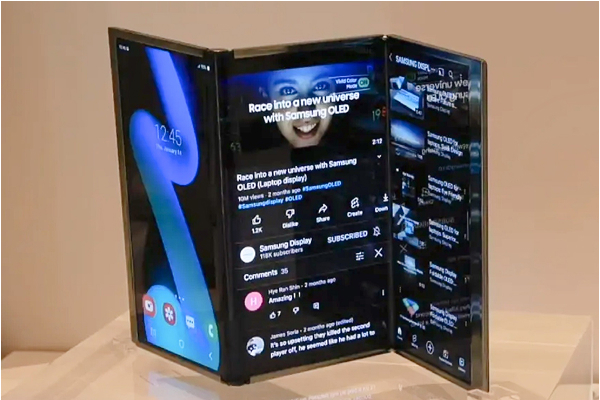
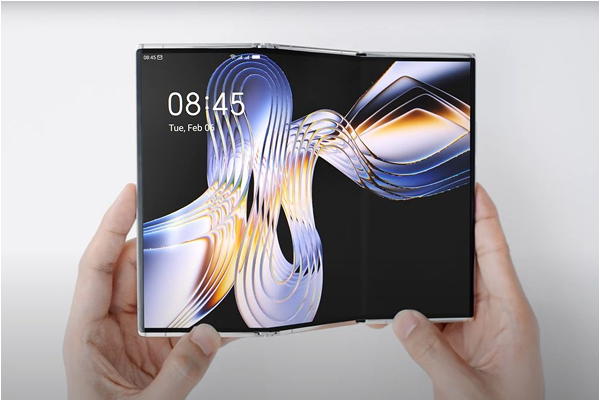
The design is the centre of all the hype. It is claimed that the Galaxy Z Tri-Fold can fold in multiple directions, which is possible due to two folding points and three linked displays. Think of it as a digital brochure which can be folded twice, creating a small rectangle when it is closed.
This kind of design can transform the usage of a phone. You can use it with just one side to accomplish a basic task, half to experience two screens, and completely to have a tablet-like experience. Flexibility is taken to another level.
Of course, two hinges mean double the engineering challenge. Samsung will also need to make sure that the folding mechanism is smooth, durable, and dust-resistant, which is not an easy task, even for a company that has been a leader in foldables.
2. A Huge Unfolded Screen – Around 10 Inches
If the design rumors prove true, the Tri-Fold could feature a huge unfolded screen, reportedly around 10 inches in size. That is almost the size of a tablet, but it fits in your pocket when it is folded.
This kind of screen provides endless opportunities. Just imagine sitting in front of a screen and watching movies, drawing, playing video games, or editing documents in such a large display without carrying an additional gadget.
Samsung brands are expected to apply its new Dynamic AMOLED technology, smooth refresh rates and better colour reproduction. The company has been increasingly making its foldable screens stronger with each passing year, and this is what would require this to be their toughest so far.
3. S Pen Compatibility May Be Missing
The compatibility of the S Pen stylus with the Galaxy Z Tri-Fold is one of the questions that has raised some controversy. Even though Samsung enthusiasts are very attached to the S Pen, there are initial signs that the first-generation tri-fold might not be compatible.
The reason? Technical challenges. Three panels folding in various directions, it is challenging to have a steady stylus pressure and screen sensitivity. The layers and hinges of the screen make the digitizer beneath work more complex.
Still, there’s hope. Samsung has a reputation for refining its features over the years. The first tri-fold does not accommodate the S Pen, but the second generation could support this feature when the design is more stable, just like other upcoming devices Samsung might reveal.
4. Three Separate Batteries Inside
This is not going to be an easy device to charge. That is why there is a lot of speculation that the Tri-Fold may actually contain three distinct battery units, one in each fold.
This would be effective in balancing the weight of the device and managing power consumption more effectively. The load might be distributed across all panels instead of having one huge battery. The combined capacity could be as much as 5,000 mAh or even more to support heavy-duty multi-tasking and media utilization.
Managing three batteries will require intelligent software to charge and discharge them in balance. Samsung has a history of working with foldables, which puts it at an advantage, as it already has the experience of managing multiple power cells within flexible products.
5. Competitive Camera Setup (Maybe Beyond 200 MP)
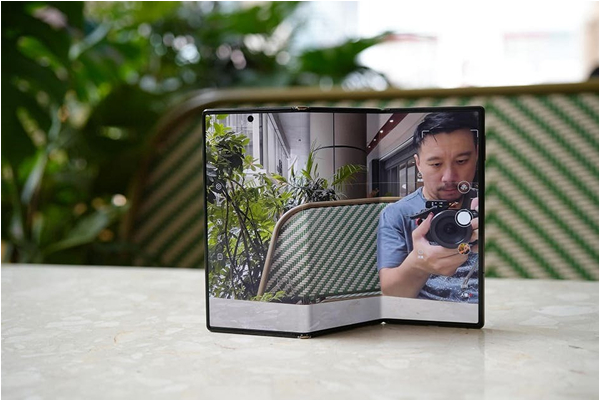
This high-end foldable would not be complete without a spectacular camera system. Galaxy Z Tri-Fold is believed to have a 200-megapixel main sensor, which is paired with an ultra-wide lens and a telephoto lens.
This setup may be equal to or even superior to the Galaxy S-series cameras. Samsung could also release a new sensor that is folded-specific and one that provides high performance without making the device thin.
One major focus may include the software enhancements, such as improved night photography and AI-based stabilization. If true, the Tri-Fold could become not just a productivity beast, but also a serious photography tool.
6. Powered by Snapdragon’s Best Chip
Performance is anticipated to be flagship under the hood. The smartphone will probably make use of the next-generation Qualcomm Snapdragon 8 Elite chip, which will be paired with 12 GB or 16 GB of RAM.
With such a strength, multi-screen multitasking will be natural. You would be able to have three apps running at a time, stream content, and make notes simultaneously without any slowing down.
Storage may begin with 256 GB and increase to 1 TB, ideal for those desiring everything on board. Since large displays are often power-consuming, Samsung might add new cooling technology to maintain some stability during high usage.
7. A Premium, High Price Tag
Get ready to pay a lot. The Galaxy Z Tri-Fold could be Samsung’s most expensive phone ever, with prices possibly starting around $2,300 and climbing close to $3,500 for higher variants. That’s steep, but it makes sense.
The Tri-Fold’s complex design, two hinges, three screens, and cutting-edge materials mean higher production costs. Samsung might initially release it in limited quantities to test demand before scaling up.
It may not be a phone for everyone, at least not yet. But like all new technologies, early adopters pave the way for the next generation, when prices usually drop.
Extra Rumor: Wider Global Release (Beyond China and Korea)
In addition to the mentioned 7 points, another powerful rumor is that Samsung can expand its rollout to other countries beyond South Korea and China. Marks such as UAE, US and even Vietnam are mentioned in leaks.
There had been rumors earlier of the Tri-Fold being a limited market product, but more recent information indicates that there is a larger plan.
A broader launch would assist in lowering the price and allow more people to experiment with this new format. However, Samsung can still restrict the supply or delay availability.
What Could Go Wrong: Risks and Challenges
Lifespan of Hinges: Two hinges increase the points of weakness. Dust, wear, and mechanical stress are bigger problems.
Thickness and Weight: Three panels, batteries, and a folding mechanism mean risk of being bulky and heavy.
Battery and Heat: Managing power and heat across multiple units folded weirdly is complicated.
Software and UI: Splitting apps across three panels seamlessly is a tough software challenge.
High Price Barrier: Such a high cost will limit mass adoption, at least initially.
Camera / Stylus Compromise: Due to space restrictions, features such as optical zoom or S Pen support might not initially be available.
Conclusion
There is a possibility that the Samsung Galaxy Z Tri-Fold can completely change how we understand a smartphone. It has two hinges, three screens and advanced technology that is likely to provide a degree of versatility never presented by a phone before.
However, it is still a mystery as most of these facts remain to be verified. But what makes us excited is the feeling that we are on the verge of something new.
The question of whether it becomes the next big thing or turns into an interesting experiment is still to be answered, but one thing is certain: Samsung is not afraid of dreaming big. And the Galaxy Z Tri-Fold may be the boldest dream of them all.